Yellowjackets Creators Confirm Final Season Will Close the Story Without Spinoffs
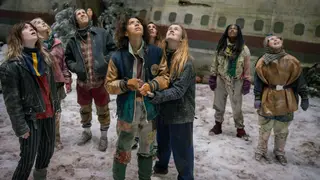
Ashley Lyle and Bart Nickerson, creators of Showtime’s 'Yellowjackets,' confirmed that the fourth and final season will conclude the series as intended, with no plans for spinoffs. They emphasized that the story was always meant to end with this season, despite initial plans for five seasons. The creators expressed hope that the finale will provide closure and satisfy long-time fans of the survival drama.
The fourth and final season of Showtime’s *Yellowjackets* is set to conclude the series as planned, with creators Ashley Lyle and Bart Nickerson confirming that no spinoffs are in development. Originally envisioned as a five-season arc, the show’s trajectory shifted when Paramount+ renewed it for a fourth season, which the creators now describe as the definitive ending. The season premiered in November 2026, marking the return of the teenage survivors to New Jersey after their plane crash and months of survival in the wilderness. The narrative centers on their psychological and emotional reintegration into society, confronting the trauma of murder and cannibalism committed to survive. Key characters from both the teenage and adult timelines—such as Natalie, Shauna, Taissa, and Travis—face pivotal moments as their pasts catch up with them. The creators emphasize that the story was always intended to end with this season, despite earlier plans for an extended run, and they are committed to delivering a complete, self-contained narrative. Their decision to close the book rather than leave it open for spinoffs reflects a deliberate artistic choice to honor the audience’s investment with a definitive conclusion.
Lyle and Nickerson, who have worked on the series since its inception, cite storytelling momentum and industry uncertainty as key factors in their pivot from five to four seasons. They felt that continuing beyond the current arc risked overextending the story or losing audience engagement, especially after reports of viewers dropping off after two seasons. The creators stress that finishing the story on their own terms was a privilege, particularly given the unpredictable nature of television production. They express hope that the finale will provide emotional closure for long-time fans of the survival drama. While the adult timelines are expected to converge dramatically in the final season, the creators have not disclosed specific plot details beyond the overarching theme of reckoning with the past. What remains unresolved is the exact nature of the final episode’s resolution, particularly how the dual timelines will converge and whether any characters will survive the conclusion.
The decision to end *Yellowjackets* after four seasons, without spinoffs, could signal a broader cultural shift in how audiences and creators perceive narrative closure in long-form television. In an era where franchises often stretch across multiple series—such as *The Walking Dead* universe or *Star Trek*’s expanding multiverse—this choice may resonate with viewers weary of endless continuations. The creators’ emphasis on a “complete story” with a period rather than an ellipsis could influence future storytelling, especially in genre dramas where unresolved arcs are common. This approach may also affect how streaming platforms evaluate series longevity, potentially encouraging more definitive endings rather than open-ended expansions. A comparable precedent is *The Leftovers*, which concluded with a similarly definitive, emotionally resonant finale, setting a benchmark for how complex, trauma-driven narratives can close with integrity. What may follow is a growing trend of creators prioritizing narrative completeness over franchise potential, especially in premium cable and streaming content. However, whether this model becomes widespread remains uncertain, as studios still benefit from serialized IP. The real test will be whether audiences reward such closures with sustained loyalty, or if the market continues to favor perpetual storytelling.