Microsoft Surface Laptop Ultra Review: Can the RTX Spark Chip Challenge the MacBook Pro?
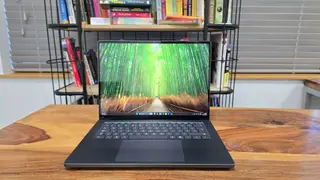
The Microsoft Surface Laptop Ultra introduces the Nvidia RTX Spark chip, aiming to position the device as a strong competitor to Apple’s latest touchscreen MacBook Pro. The laptop features a refined design, improved performance, and enhanced graphics capabilities, though its success hinges on real-world productivity and user experience. It represents Microsoft’s push to redefine its premium laptop line with cutting-edge hardware.
The Microsoft Surface Laptop Ultra, released on November 21, 2026, marks a pivotal moment in Microsoft’s premium laptop strategy by integrating Nvidia’s RTX Spark chip, a specialized AI and graphics processor designed for local AI inference and high-performance rendering. Priced at $2,599.99 (or £2,599, AU$4,399) for the base model, it targets creative professionals and developers who demand robust on-device AI capabilities and advanced graphics processing—features previously more associated with Apple’s MacBook Pro lineup. This move follows a period of perceived stagnation in the Surface line, which had struggled to match Apple’s design cohesion and ecosystem integration despite offering strong Windows-specific features. The RTX Spark chip, though not yet widely available outside select devices, signals Microsoft’s intent to compete directly in the high-end productivity market by leveraging AI hardware innovation. Key players include Microsoft, which seeks to reassert its premium brand presence; Nvidia, aiming to expand its influence beyond gaming into professional computing; and Apple, whose MacBook Pro continues to set benchmarks in battery life and user experience. However, unresolved questions remain: how scalable is the RTX Spark platform across different software ecosystems, and will the performance gains justify the steep price and reduced battery life—reportedly significantly worse than the MacBook Pro’s—over time? The device’s success may hinge on whether developers and creative users adopt its AI features at scale.
The Surface Laptop Ultra could influence how consumers perceive the value of on-device AI and specialized hardware in personal computing, potentially shifting demand toward devices that prioritize local processing over cloud dependency. Professionals in design, video editing, and AI development may benefit from faster inference times, but the high cost and poor battery life could deter broader adoption. This mirrors the early days of the iPad Pro, which initially appealed to niche users before gaining wider traction through ecosystem maturity. If the RTX Spark chip becomes a standard in high-end laptops, it may pressure Apple to accelerate its own on-device AI roadmap, possibly leading to a new hardware arms race. However, the long-term impact depends on software optimization and developer support—factors not yet evident. The market may see a bifurcation: premium devices for power users with specialized chips, and more balanced, affordable options for general consumers. What remains uncertain is whether the performance gains will be meaningful enough to justify the trade-offs, especially as battery technology lags behind processing advancements.