Trump Furious at NBC Reporter for Questioning Immigration Policies During Press Conference
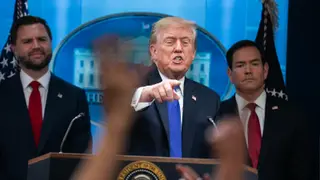
President Donald Trump erupted in anger at NBC News White House correspondent Monica Alba during a press conference, calling her 'rude' and demanding she be moved to the back row. The outburst occurred after Alba asked a follow-up question about immigration, a topic Trump had just praised in a speech highlighting White House Chief of Staff Stephen Miller. The White House later amplified the attack by labeling Alba a 'Fake News loser' on social media.
On November 20, 2026, during a White House press conference, President Donald Trump publicly reprimanded NBC News White House correspondent Monica Alba for asking a follow-up question about immigration policy, calling her “rude” and demanding she be moved to the back row. The exchange occurred immediately after Trump praised White House Chief of Staff Stephen Miller, whom he described as having “a tremendous heart” despite criticism of Miller’s hardline immigration stance. Alba, representing NBC News, attempted to press Trump on the contradiction between his praise and the real-world impact of Miller’s policies, but was met with escalating hostility. Trump dismissed her relevance, questioned her affiliation, and refused to engage, culminating in a directive to reposition her. The White House’s Rapid Response account on X later amplified the attack by labeling Alba a “VERY rude Fake News loser,” reinforcing a pattern of public shaming of journalists. This incident is part of a broader pattern: Trump has previously targeted female reporters including Bloomberg’s reporter during Epstein-related questioning, CNN’s Kaitlan Collins, ABC’s Rachel Scott, CBS’s Nancy Cordes, and NBC’s Yamiche Alcindor, often using personal insults and dismissive language. The White House’s social media amplification of these attacks suggests a coordinated effort to discredit critical press coverage, particularly from outlets perceived as adversarial. The underlying dynamic reflects a long-standing tension between executive power and press accountability, with the administration leveraging public platforms to marginalize dissenting voices. What remains unresolved is whether such conduct will trigger formal censure, affect press access protocols, or influence media coverage of future administrations.
This incident underscores a growing pattern of presidential hostility toward the press, particularly female journalists, which may erode public trust in both media institutions and democratic norms. When leaders publicly shame reporters, especially during high-profile events, it risks normalizing intimidation and chilling investigative journalism. The targeted nature of these attacks—focusing on women and specific outlets—could deepen perceptions of media bias and further polarize public discourse. Comparable to the Nixon-era “enemies list” or the Trump administration’s frequent use of “fake news” rhetoric, this behavior may embolden future leaders to weaponize social media against critical reporting. The broader impact could include a retreat from press briefings by journalists who fear personal attacks, or increased legal scrutiny of executive conduct. Institutions like the White House press corps may reconsider access policies, potentially leading to more guarded interactions. What to watch for next is whether press organizations will respond with coordinated pushback, such as formal complaints or public statements, or whether the normalization of such behavior will persist. The long-term effect may be a further decline in the perceived legitimacy of the press, especially among audiences already skeptical of mainstream media.