Study Finds No Evidence That Essential Genes Mutate Less Frequently Than Others
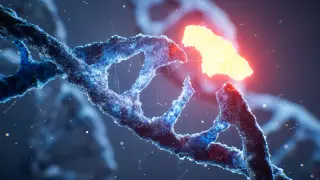
A new analysis by researchers at the University of Bath challenges a 50-year-old evolutionary theory claiming that essential genes are protected from mutations. The study examined spontaneous mutations in E. coli and yeast and found no difference in mutation rates between essential and non-essential genes. Earlier studies may have been skewed by the rapid elimination of harmful mutations through natural selection.
A 2026 study led by Dr. Sofia Radrizzani and Professor Laurence D. Hurst at the University of Bath challenges a long-standing evolutionary hypothesis first proposed in 1972, which suggested that essential genes—those critical for survival—mutate less frequently than non-essential ones. The researchers analyzed the largest dataset of spontaneous mutations in two model organisms: Escherichia coli and Saccharomyces cerevisiae, using mutation accumulation experiments designed to minimize the effects of natural selection. Their findings, published in PLOS Biology, revealed no significant difference in mutation rates between essential and non-essential genes. This undermines the idea that evolution has evolved mechanisms to protect vital genetic material. Earlier studies may have been skewed by the rapid elimination of harmful mutations in essential genes through natural selection, creating the illusion of lower mutation rates. The team conducted three independent tests to rule out selection bias, finding no substantial distortion in their data. The study’s implications are significant because the theory had persisted for decades, even resurfacing in renewed debate in 2023, and had influenced how scientists interpret genetic stability and evolutionary adaptation. The researchers argue that the theory’s persistence reflects more about scientific enthusiasm than empirical support. What remains unresolved is whether mutation rate variation could still occur in other organisms or under different evolutionary pressures, and whether mechanisms like targeted DNA repair, though not reducing overall mutation frequency, might still influence where mutations occur.
This study could reshape how biologists interpret genetic stability and evolutionary dynamics, particularly in fields like synthetic biology, medicine, and antibiotic resistance research, where understanding mutation patterns is critical. If essential genes are not inherently protected from mutations, then the risk of deleterious changes in vital pathways may be higher than previously assumed, affecting drug development and genetic disease modeling. The findings may also influence how evolutionary models are constructed, particularly in computational simulations that assume differential mutation rates. A comparable earlier case is the debate over punctuated equilibrium versus gradualism in evolution, where initial controversy stemmed from data interpretation rather than fundamental mechanisms. Here, the issue is not about pace but about the perceived control of mutation itself. The study may prompt a re-evaluation of past research that relied on population-level genetic data, potentially revealing similar biases. What to watch for next is whether other research groups replicate these findings in multicellular organisms or under stress conditions, and whether the scientific community revises textbooks or models to reflect this new understanding. The broader impact may be a more nuanced view of evolution—one where randomness is not just a source of variation but also a persistent, unfiltered force.