Faraday Future's Aegis Classic Pro Robot Dog Drops to $2,990 in Black Friday Deal
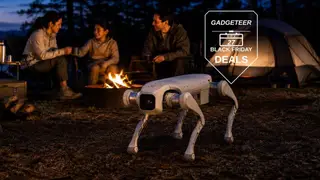
Faraday Future has slashed the price of its Aegis Classic Pro robot dog to $2,990 for Black Friday, down from $4,490, with the discount available on Amazon and the company’s own site. The 15 kg quadruped robot features 12 degrees of freedom, a 4K camera, and over 10 preloaded dynamic movements including backflips and bipedal stands. It is marketed as a companion device with a customizable costume and is designed for home use rather than industrial or academic applications.
Faraday Future has slashed the price of its Aegis Classic Pro robot dog to $2,990 for Black Friday 2026, down from $4,490, with the deal available on both Amazon and the company’s official website. The 15 kg quadruped robot, measuring 610 mm nose to tail, features 12 degrees of freedom, a 4K wide-angle camera, and over 10 preloaded dynamic movements including backflips and bipedal stands. It is marketed as a companion device for home use, complete with a remote controller, one customizable costume, and a 216 Wh battery offering 1–2 hours of runtime depending on activity. The robot can climb stairs up to 16 cm, navigate obstacles up to 35 cm, and carry payloads of up to 8 kg, with a recommended 5 kg load for sustained operation. Despite the hardware’s capability, the software remains underdeveloped, and the company’s track record in delivering on its automotive promises raises questions about long-term support and updates. The Black Friday discount marks the first time a robot of this class has been priced within reach of a household budget, signaling a shift in accessibility.
The background reflects Faraday Future’s long-standing struggle to deliver on its electric vehicle ambitions, which has cast doubt on its ability to sustain consumer robotics products. The Aegis Classic Pro is part of a broader lineup including the Edu and Ultra models, but only the Classic Pro is currently available at a consumer price point. The company appears to be betting on early adopters to fund future development through patience and financial commitment. The target buyers are hobbyists who’ve outgrown basic kits, creators needing a mobile camera platform, and families treating the robot as a household gadget. However, the absence of a polished app, lack of weatherproofing, and uncertainty around software updates and customer support remain unresolved. What comes next—whether Faraday Future can deliver on its promises—will determine if this product becomes a milestone or another abandoned experiment.
The Aegis Classic Pro’s Black Friday pricing could signal a broader trend toward consumer accessibility in advanced robotics, potentially encouraging other companies to enter the personal robot market with more affordable, home-oriented products. While the robot dog is not weatherproof or app-ready, its presence in the home may normalize robotic companionship, especially among tech-savvy families and content creators. This could influence adjacent markets such as smart home integration, remote monitoring, and interactive entertainment. A comparable precedent is the early adoption of smart speakers like Amazon Echo, which initially lacked full functionality but gained traction through user engagement and iterative updates. If Faraday Future follows a similar path—relying on early adopters to sustain development—this could become a model for niche tech products that depend on community and long-term support. However, the risk remains high: without consistent software updates and reliable service, the product may fail to retain users, damaging the company’s credibility. What to watch for is whether Faraday Future releases a robust app ecosystem and provides transparent updates, which could determine if this robot becomes a cultural touchstone or a cautionary tale.