Five Notable Players Released Ahead of Lockout, Join Free Agent Market
The non-tender deadline has released five prominent players into the free agent market, including outfielder Kyle Isbel and first baseman Luke Raley. Isbel, known for his elite defensive metrics with 50 OAA, is valued for his glove despite limited offense. Raley, non-tendered by the Seattle Mariners, is another player with defensive value and potential for a rebound. These moves reflect teams’ decisions to cut costs amid arbitration and injury concerns.
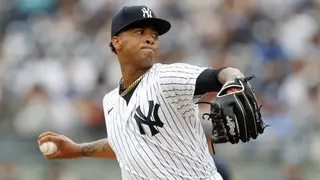
On November 21, 2026, the non-tender deadline marked a pivotal moment in the MLB offseason, releasing five notable players into the free agent market ahead of the looming December 1 lockout. Among them were outfielder Kyle Isbel (Kansas City Royals), first baseman Luke Raley (Seattle Mariners), pitcher Luis Gil (New York Yankees), pitcher Bailey Ober (Minnesota Twins), and outfielder Trevor Larnach (Minnesota Twins). Isbel, despite a career .221 batting average, stands out with 50 OAA (outs above average) since 2022, placing him among the elite defensive outfielders in baseball. Raley, 32, posted a 106 wRC+ and 15 home runs in 2026 but struggled with a 32.4% strikeout rate and a 5.2% walk rate, leading to his release despite past success. Gil, a former AL Rookie of the Year in 2022, was non-tendered despite a projected $2 million in arbitration, signaling deep concerns over his health after just 84 1/3 innings across two seasons. Ober, a durable 600-inning pitcher over four seasons, was let go despite his reliability, while Larnach, who posted a career-high 123 wRC+ and 2.2 fWAR in 122 games before a wrist injury, was also released. The Twins’ decision to non-tender both Ober and Larnach, along with trading Royce Lewis, freed nearly $20 million for potential free agent signings. These moves reflect broader team strategies to manage arbitration costs, address injury risks, and restructure rosters ahead of a potential lockout.
The release of these five players highlights how MLB teams are prioritizing financial flexibility and risk mitigation in a high-stakes offseason. With the Collective Bargaining Agreement set to expire on December 1, clubs are aggressively trimming payroll and clearing roster space ahead of the lockout. The focus on players like Isbel and Raley—valued more for defense or past performance than current production—suggests a market shift toward specialized roles and second chances. Teams may be more willing to gamble on high-upside, injury-prone players like Gil or Ober if they can afford to absorb the risk. The Twins’ strategy of non-tendering high-cost, high-potential players to free up capital could become a model for other clubs facing similar financial constraints. This could lead to a surge in one-year contracts with performance incentives, particularly for players with defensive prowess or proven durability. The broader impact may include increased volatility in player valuation, with more players entering the market with diminished expectations, and a potential rise in minor league deals or international signings as teams seek value. What remains uncertain is whether the lockout will disrupt these moves or if teams will accelerate signings before the shutdown.