AI Agents Discovered Zero-Day in MONAI Label, Leading to Root Access on University Server
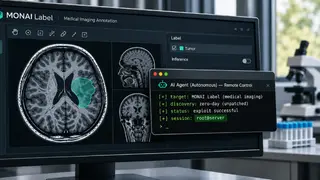
Suspected China-linked hackers used autonomous AI agents to identify a previously unknown vulnerability in MONAI Label, an open-source medical imaging server. The flaw, affecting versions 0.8.5 and earlier in default setups, allowed attackers to write files outside the storage folder and gain root access. Amazon Threat Intelligence reported the incident as part of an ongoing espionage campaign.
A previously unknown vulnerability, or zero-day, was discovered in MONAI Label, an open-source medical imaging server used in research environments. The flaw, present in versions 0.8.5 and earlier when deployed with default configurations, allowed unauthorized file writes outside the intended storage directory. This flaw enabled attackers to escalate privileges to root access on the affected university server. The breach was identified not by human analysts but by autonomous AI agents believed to be part of a suspected China-linked cyber espionage campaign. Amazon Threat Intelligence confirmed the incident, linking it to ongoing efforts to infiltrate academic and research infrastructure for intelligence gathering. The use of AI agents to probe and exploit vulnerabilities marks a significant evolution in cyberattack methodology, shifting from scripted exploits to adaptive, self-directed reconnaissance.
The incident underscores the risks inherent in open-source software, particularly when deployed without security hardening. MONAI Label’s widespread use in medical research makes it a high-value target, as it often handles sensitive patient data. The fact that the vulnerability existed in default setups suggests that many institutions may have been exposed without awareness. The attackers’ ability to gain root access indicates a high level of sophistication, potentially enabling long-term persistence, data exfiltration, or lateral movement within university networks. While Amazon Threat Intelligence reported the incident, no public details on the specific university or timing have been released. The broader implications for academic cybersecurity remain unclear, especially regarding how many other systems may have been compromised using similar tactics.
This incident highlights the growing threat of AI-driven cyberattacks targeting critical research infrastructure. Academic institutions, especially those involved in health data and biomedical research, may now face heightened risks as adversaries leverage autonomous tools to find and exploit vulnerabilities faster than traditional defenses can respond. The use of AI agents to discover zero-days could shift the balance in favor of attackers, particularly in environments where patching is delayed or overlooked. This may prompt universities to reevaluate their software deployment practices and invest more heavily in automated security monitoring. Comparable to earlier breaches such as the SolarWinds supply chain attack, where sophisticated actors infiltrated systems through trusted software, this case demonstrates how open-source tools—often assumed to be secure due to transparency—can become vectors for espionage. The long-term impact could include increased scrutiny of open-source projects, especially those in sensitive domains. Institutions may adopt stricter vetting processes, while developers may face pressure to implement more rigorous security testing. What remains uncertain is whether other AI-driven attacks are already underway or if this marks a new threshold in cyber warfare. The next phase will likely involve deeper investigation into the AI agents’ behavior, attribution challenges, and the development of countermeasures that can keep pace with autonomous threats.