Ancient Bison Stampede Site in Texas Reveals 3,000 Years of Hunting Tradition
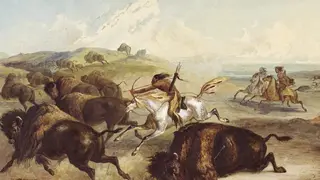
A team led by August Costa from Rice University discovered evidence of at least seven bison stampedes at the Nighthawk site in Caprock Canyons State Park, Texas, spanning roughly 3,000 years. The findings challenge the assumption that cliff hunting was limited to the northern Great Plains. The study, published in American Antiquity, reveals sustained human activity and sophisticated hunting practices in the Texas Panhandle.
At the Nighthawk site in Caprock Canyons State Park, Texas, a research team led by August Costa from Rice University uncovered evidence of at least seven distinct bison stampedes occurring over a span of approximately 3,000 years. These findings, detailed in the journal American Antiquity, indicate that human hunters repeatedly herded bison off cliffs to kill them, a practice previously thought to be largely confined to the northern Great Plains. The site’s stratified layers reveal a long-term, sustained pattern of hunting activity, suggesting that such methods were not isolated events but part of a consistent cultural tradition in the Texas Panhandle. The discovery challenges prior assumptions about the geographic and temporal limits of cliff hunting, expanding the known scope of prehistoric hunting strategies in North America.
The research builds on earlier archaeological work that documented bison kills in the Great Plains, but this study is significant for demonstrating that similar techniques were employed far south and west, in a region not traditionally associated with such practices. The persistence of these hunting events over millennia implies a deep-rooted knowledge of animal behavior, terrain, and coordinated effort among hunter-gatherer groups. August Costa and his team at Rice University are focused on understanding the continuity and adaptation of subsistence strategies in a changing environment. Their work may influence how archaeologists interpret other sites in the southern Plains and could prompt re-evaluation of similar findings elsewhere.
What remains unresolved is the extent to which these hunting practices were influenced by environmental changes, population shifts, or social organization. The study does not yet clarify whether the same groups returned to the site repeatedly or if different cultural groups adopted the method over time. Future research may explore the broader implications for understanding mobility, resource management, and cultural transmission in prehistoric North America.
The discovery at the Nighthawk site could reshape how archaeologists and historians view the cultural and technological sophistication of ancient peoples in the southern Great Plains. By showing that complex hunting strategies persisted for millennia in a region not previously emphasized, the findings may prompt institutions like museums and educational curricula to revise narratives about indigenous innovation and adaptation. The study may also influence land management policies in state parks, where archaeological sites are protected but often underfunded. Comparable to the earlier discovery of the Folsom site in New Mexico, which revolutionized understanding of early human presence in North America, this find may similarly shift scholarly consensus. While the Folsom people were known for their distinctive spear points, the Nighthawk site reveals a different kind of sustained cultural practice—coordinated hunting over thousands of years. This could lead to increased funding for archaeological surveys in under-studied regions. What may follow is a broader reassessment of other potential cliff-hunting sites across the southern Plains. Researchers may look for similar stratified evidence in other canyons or elevated terrain. The public may also become more aware of the deep human connection to landscapes, potentially influencing how heritage sites are preserved and interpreted.