Ultrafast X-ray Study Reveals Water Molecules Shatter Faster Than Electrons Can React
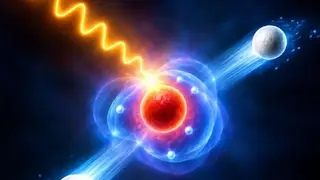
Scientists observed that water molecules can break apart within a few femtoseconds after being struck by X-rays, faster than their electrons can undergo normal relaxation. This unexpected behavior shows that nuclear motion can outpace electronic processes, leading to the formation of an excited, neutral oxygen atom. The discovery challenges previous models of water's response to radiation and reveals a new pathway for generating reactive atomic oxygen.
In November 2026, researchers led by Florian Trinter of the Fritz Haber Institute (FHI) in Berlin, along with collaborators from DESY’s PETRA III facility in Hamburg and MAX IV’s FlexPES beamline in Lund, Sweden, observed that water molecules can dissociate in fewer than a few femtoseconds after absorbing an X-ray photon—faster than the expected electronic relaxation processes. Using high-resolution electron spectroscopy, they detected unusually sharp spectral peaks that could not be explained by standard Auger decay or typical molecular fragments like hydroxyl radicals. Instead, the data pointed to a previously unrecognized pathway: the rapid rupture of both O–H bonds before Auger decay could occur, resulting in an excited, neutral oxygen atom. This outcome was confirmed through detailed atomic and molecular calculations by Ludger Inhester of CFEL at DESY, which matched the observed electron energies to the decay of a neutral oxygen atom, not a hydroxyl fragment. The findings challenge long-standing models of water’s response to ionizing radiation, particularly the assumption that electronic relaxation must precede structural changes. The experiments were conducted on isolated water molecules in the gas phase, allowing precise control and detection of ultrafast dynamics.
The work builds on decades of research into radiation chemistry and X-ray interactions with matter, particularly the well-documented Auger effect in atoms and molecules. Earlier studies had attributed certain electron emission features in water to hydroxyl radicals, but this research suggests those signals may instead originate from excited neutral oxygen atoms formed through ultrafast dissociation. The team’s dual validation at two independent synchrotron facilities—PETRA III and MAX IV—adds robustness to the findings, reinforcing the credibility of the new mechanism. The researchers aim to refine models of radiation-induced chemistry, particularly in biological systems where water is the primary medium. Unresolved questions remain about how this process scales in condensed phases, such as liquid water or biological tissues, and whether similar dynamics occur in other polyatomic molecules. Future work may explore the role of solvent environments and the reactivity of the neutral oxygen atom in initiating downstream chemical reactions.
This discovery could reshape understanding of radiation damage in biological systems, where water is the dominant molecule. If neutral atomic oxygen forms rapidly during X-ray exposure, it may contribute more significantly to oxidative stress and DNA damage than previously assumed, potentially affecting cancer radiotherapy protocols and radiation safety standards. The finding may also influence the design of radiation detectors and imaging technologies that rely on accurate interpretation of electron spectra from water-rich environments. In materials science, the ultrafast dissociation mechanism could inform the development of radiation-resistant materials or new pathways for generating reactive oxygen species in catalytic processes. A comparable earlier case is the discovery of non-thermal electron emission in metals, which initially defied classical models and eventually led to new theories in surface physics. Here, the shift from assuming electronic relaxation precedes structural change to recognizing nuclear motion as dominant could similarly prompt a reevaluation of fundamental processes in photochemistry. What to watch for next includes experimental verification in liquid water and biological matrices, as well as efforts to harness this pathway for controlled chemical synthesis or advanced radiation diagnostics.