Conservative media faces internal rifts after Trump’s electoral defeat
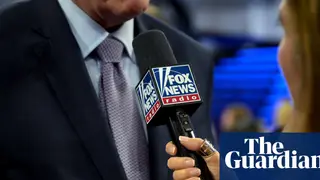
Two weeks after Democrats gained control of Congress, conservative media outlets are debating whether to distance themselves from Donald Trump or double down on his MAGA movement. While some hosts like Larry Kudlow avoided blaming Trump directly, others, including Steve Bannon, argue the party’s defeat signals a need for reordering. Former Fox News host Tucker Carlson suggested the end of the Fox News era, while outlets like Real America’s Voice plan to intensify their alignment with Trump.
Two weeks after the 3 November 2026 midterm elections, in which Democrats gained control of Congress in a so-called “blue wave,” conservative media outlets are undergoing a profound internal reckoning over their relationship with Donald Trump. While Fox News hosts like Larry Kudlow avoided direct blame, attributing the loss to voters who failed to appreciate the strength of the economy, others such as Steve Bannon and Tucker Carlson have voiced stark criticism. Bannon, now hosting on Real America’s Voice, claimed the election results signal a moment of reordering, predicting that Fox News—under Rupert Murdoch—will attempt to distance itself from Trumpism by embracing more moderate, George W. Bush-style Republican values. He accused Murdoch of harboring long-standing animosity toward Trump and suggested the network would use the defeat to gradually marginalize the MAGA movement through subtle, incremental shifts. In contrast, Real America’s Voice and outlets like The Daily Caller are planning to double down on populist nationalism, with the latter explicitly distancing itself from Trump’s foreign policy, particularly his controversial war against Iran initiated in February 2026. The Daily Caller, co-founded by Tucker Carlson in 2010, has positioned itself as a more principled, America-first outlet focused on younger voters affected by economic hardship, signaling a potential pivot away from Trump’s brand. Meanwhile, conservative commentators like Ann Coulter and Erick Erickson have criticized Fox News and the New York Post for contributing to the GOP’s defeat, citing their role in amplifying Trump’s Iran policy and fostering division within the party. The extent to which this media realignment will translate into broader political shifts remains uncertain.
The internal fractures within conservative media could signal a broader recalibration of the right’s political strategy, potentially weakening Trump’s grip on the movement even as he remains a dominant figure. If outlets like The Daily Caller succeed in attracting younger, economically disillusioned voters by distancing themselves from Trump’s polarizing rhetoric, they may help reshape the conservative base in ways that could influence future elections. This dynamic echoes the post-2016 realignment when the rise of Breitbart and Fox News helped consolidate Trump’s base, but now the reverse—media outlets attempting to move beyond Trump—may indicate a generational or ideological shift. The impact on political fundraising, party cohesion, and messaging could be significant, especially if media figures with access to Mar-a-Lago or Trump’s inner circle choose to disengage. The outcome may depend on whether the conservative media ecosystem can sustain a credible alternative to MAGA without alienating its core audience. What remains unclear is whether this internal debate will lead to a unified new direction or deepen existing divisions, potentially fracturing the movement further. Observers should watch for how media platforms adapt their editorial stances, whether new alliances form, and how grassroots conservative organizations respond to these shifts.