NIST and AWS Push for Standardized Provenance in Semiconductor and Cloud Architecture
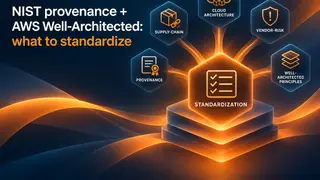
In November 2026, NIST’s semiconductor traceability workshop and the US government’s investigation into Megaspeed for potential Nvidia chip diversion highlighted the growing importance of supply chain provenance. Concurrently, AWS updated its Well-Architected Framework to distinguish between Cloud Foundations and Cloud Workloads, emphasizing auditability and control inheritance. CTOs must now require verifiable evidence of component origin and governance, moving beyond vendor claims to documented supply chain controls.
In November 2026, two pivotal developments underscored the growing urgency of supply chain and cloud architecture provenance: the National Institute of Standards and Technology (NIST) hosted its second Semiconductor Traceability and Provenance Workshop, and the U.S. government confirmed an investigation into Megaspeed over suspected violations involving the diversion of high-end Nvidia AI chips to China via intermediaries, as reported by the BBC. Concurrently, Amazon Web Services (AWS) updated its Well-Architected Framework to formally distinguish between “Cloud Foundations” — the shared, foundational infrastructure like identity, networking, and logging — and “Cloud Workloads,” which are application-specific implementations that inherit controls from the foundation. These events reflect a broader shift from trust-based vendor assurances to evidence-based governance, driven by heightened regulatory scrutiny, geopolitical tensions, and increasing cyber-attack surface complexity. The background includes prior concerns over semiconductor supply chain vulnerabilities, particularly around critical materials and manufacturing origins, and earlier reports of export control breaches involving advanced chips. NIST seeks to standardize traceability across the semiconductor lifecycle, including custody, handling, and substitution risks, while AWS aims to institutionalize auditability through architectural separation. Key players include U.S. federal agencies enforcing export controls, tech giants like Nvidia and AWS, and enterprise CTOs tasked with balancing innovation, compliance, and risk. What remains unresolved is how standardized provenance will be enforced across global supply chains, especially when vendors lack full visibility or when compliance burdens disproportionately affect smaller suppliers. The next phase likely involves regulatory codification of provenance requirements and broader industry adoption of verifiable digital supply chain records.
The convergence of NIST’s standards initiative, the Megaspeed investigation, and AWS’s architectural shift signals a transformation in how organizations manage risk in technology procurement and cloud operations. Enterprises, especially those in defense, finance, and healthcare, may face increased compliance costs and longer procurement cycles as they demand verifiable evidence of component origin and control inheritance. This could disproportionately affect smaller vendors lacking the infrastructure to maintain detailed provenance records, potentially reshaping supplier ecosystems. The broader impact may extend to global semiconductor trade, where stricter provenance tracking could exacerbate supply constraints or incentivize regionalized manufacturing. A comparable precedent is the 2018 U.S. semiconductor export controls on Huawei, which disrupted global supply chains and prompted companies to restructure their vendor relationships. Today’s developments could similarly catalyze a shift toward “trusted” or “verified” supply chains, with digital twins or blockchain-based logs emerging as potential tools. However, the scalability and interoperability of such systems remain uncertain. What to watch for is whether governments or consortia will develop enforceable standards for provenance data formats, and how cloud providers will integrate these into their compliance offerings. The outcome may determine whether provenance becomes a competitive differentiator or a compliance burden.