Chess.com expands into 11 classic games with new AI-powered platform
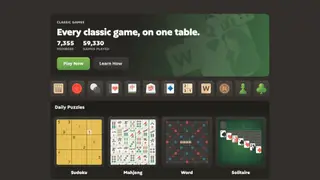
Chess.com has launched a new Classic Games platform featuring 11 non-chess titles including mahjong, sudoku, solitaire, shogi, and a Scrabble alternative called word. The expansion, driven by community demand and AI tools, aims to build a unified community for classic games. The platform is now in public beta on web and mobile apps.
Chess.com launched its Classic Games platform on November 21, 2026, introducing 11 non-chess games—backgammon, checkers, go, hearts, mahjong, shogi, sudoku, solitaire, xiangqi, and a Scrabble alternative called word—available in public beta on web and mobile apps. The expansion, driven by community demand and powered by AI-assisted development, builds on the company’s prior move to launch Gambit, a poker platform, earlier in 2026. The platform leverages Chess.com’s existing infrastructure, including its rating systems, bot characters like Martin, and design framework, allowing rapid deployment with a small team. Chief Growth Officer Albert Cheng emphasized that the games were selected based on community feedback, market research, and the team’s confidence in serving them well, focusing on classics with deep learning curves and strong community potential. While Chess.com continues to prioritize chess—its core product, which remains highly popular with record daily active users—the new platform represents a strategic shift to unify diverse classic game communities under one digital roof. The company maintains that less than 1% of its workforce is dedicated to developing these new games, underscoring the efficiency gained through AI in coding and system integration. Notably, AI was not used for art or design, which were crafted by human teams, reflecting a deliberate balance between automation and creative integrity.
Chess.com’s expansion into classic games could reshape how digital platforms approach niche, community-driven entertainment, potentially setting a precedent for other legacy game ecosystems to go digital and interconnected. By using AI to accelerate development while preserving human-centered design, the company may demonstrate a scalable model for reviving older games in a modern context—similar to how platforms like Steam revitalized indie gaming. The move may also influence how AI is perceived in creative industries: if AI is seen as a tool for efficiency rather than replacement, it could ease tensions seen elsewhere in the games and media sectors. However, it remains unclear how well these new games will retain or grow their communities outside of Chess.com’s existing user base, or whether the platform will face challenges in differentiating itself from standalone apps. The long-term success of Classic Games will depend on sustained engagement, which may hinge on whether the community-driven ethos can be maintained at scale. What’s next could include deeper integration with social features, live events, or even AI-generated content tailored to individual players’ skill levels—watching how the platform evolves will reveal whether AI-powered scaling can preserve authentic, human-centered gameplay experiences.