COP31 Fails to Secure New Climate Pledges Despite Electrification Momentum
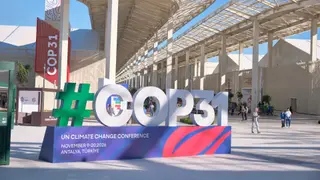
COP31 concluded without new global commitments, as many countries rejected further negotiations on phasing out fossil fuels, undermining international climate cooperation. Despite political setbacks, 90 nations support a global electrification goal, and businesses are actively investing in the transition, demonstrating strong real-economy momentum. The We Mean Business Coalition urges governments to fulfill existing pledges on renewable energy, energy efficiency, and fossil fuel phaseouts to restore trust in the COP process.
COP31, held in Antalya in November 2026, concluded without a new global agreement on climate action, primarily due to a bloc of countries refusing to negotiate further on phasing out fossil fuels—marking a significant breakdown in multilateral cooperation. Despite this, 90 nations, including Germany, the UK, Norway, Japan, Canada, the EU, South Korea, Spain, Denmark, the Philippines, and Colombia, formally endorsed the Global Electrification Pledge, committing to achieve 35% electrification by 2035. This pledge, presented through the Electrification Delivery Package, was backed by evidence from over 150 countries, 37 cities, and more than 260 businesses, demonstrating real-economy momentum. The failure to reach consensus on fossil fuel phaseouts echoes prior COPs, notably COP28 in Dubai (2023), where a landmark agreement was reached to transition away from fossil fuels—yet this commitment was now seen as non-negotiable by many nations, leading to the collapse of further negotiations. The We Mean Business Coalition, led by CEO Maria Mendiluce, criticized the political deadlock, stressing that while international talks failed, the economic shift toward electrification is already underway. The coalition urges governments to fulfill existing pledges—tripling renewable energy, doubling energy efficiency, and phasing out fossil fuels—by enacting national policies that support grid expansion, storage, and investment in electrified transport, buildings, and industry. What remains unresolved is whether this grassroots momentum can be scaled through coordinated policy, especially as geopolitical tensions continue to challenge the COP process.
The failure of COP31 to produce a new agreement may weaken global confidence in multilateral climate diplomacy, particularly among investors and businesses that rely on predictable policy signals. While the absence of a binding outcome is a setback, the strong backing of the electrification pledge by 90 nations—many of them advanced economies—suggests that national-level action may continue to accelerate regardless. This could lead to a divergence between international negotiations and real-world progress, potentially creating a two-tier system where policy is driven more by domestic economic incentives than by global consensus. The situation mirrors the 2015 Paris Agreement, where initial political ambition was followed by uneven implementation; however, unlike then, today’s momentum is anchored in tangible business and city-level commitments. The real impact may be felt in energy markets, where continued investment in electrification could outpace fossil fuel infrastructure, even without new international targets. What to watch for next is whether governments will use the momentum from COP31 to strengthen domestic policies—especially in grid modernization and clean energy deployment—thereby turning the current momentum into lasting structural change.