Complete Guide to Finding the Three Riata Cars for Wyman’s Restoration in GTA 6
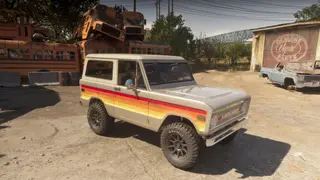
To restore the second classic car for Wyman in Grand Theft Auto 6, players must locate three '70 Riata vehicles across Key Lento. One is found north of the Leonida Key Lento Mini-mart, another under a stilt house on Southwind, and the final one behind the ruined gas station near Grassivers. Each car must be scanned with the WAiNK It app to advance the restoration mission.
In Grand Theft Auto 6, players must locate three '70 Riata vehicles across Key Lento to restore the second classic car in Wyman’s collection, a task detailed in a guide published on 22 November 2026 by Sean Martin, senior guides writer. The first Riata lies north of the Leonida Key Lento Mini-mart, beneath a brown stilt house on the northernmost road of the key. The second is found under a stilt house on Southwind, Goose Key, near the Mile Zero Air Station and Xero Gas - Southwind station. The third, and most challenging, is behind the ruined gas station just north of Grassrivers Cafe & Deli in Shoeless Keys—a four-star area where police choppers may respond to player activity. Each car must be scanned using the WAiNK It app to progress the mission. Once all three are collected, Wyman requests $1,500 in labor fees, after which players receive a map marker to his scrapyard to claim the completed vehicle. This task follows the completion of the Transgressor mission, marking a shift from earlier story beats involving the protagonist’s initial car restoration. The narrative arc reflects Rockstar’s ongoing emphasis on player-driven side content, blending exploration with mechanical progression. The Riata quest is part of a broader system of vehicle restoration, referencing prior guides on the Transgressor and other in-game mechanics. The mission’s structure—requiring physical exploration, environmental awareness, and time-sensitive navigation—mirrors earlier GTA traditions of rewarding meticulous play. What remains unresolved is whether these vehicles will have unique performance traits or cosmetic upgrades in the final game, or if they serve purely narrative purposes. The full scope of Wyman’s collection and its impact on the game’s economy or story arc is still unknown.
The Riata restoration quest exemplifies how modern open-world games use micro-objectives to deepen player engagement and extend gameplay longevity. By embedding collectible vehicles in specific, often overlooked locations, Rockstar encourages exploration and reinforces the game’s immersive world-building. This approach may influence future titles to prioritize environmental storytelling through tangible, player-driven tasks. The inclusion of real-world-inspired locations like Key Lento and Shoeless Keys—modeled after Miami’s coastal geography—could shape how players perceive virtual spaces as culturally resonant environments. Comparable to the success of Pokémon GO’s location-based gameplay, GTA 6’s vehicle hunts may inspire broader trends in gamified urban exploration. However, the reliance on specific in-game mechanics like the WAiNK It app could also raise accessibility concerns for players unfamiliar with augmented reality features. The mission’s time-sensitive nature in high-risk zones may also affect player behavior, potentially encouraging riskier tactics or prompting community-driven guides to emerge. As the game’s release nears, such side content could shape player expectations for future updates or expansions, possibly influencing how developers balance narrative depth with mechanical complexity. What remains to be seen is whether these restoration tasks will evolve into persistent systems with long-term rewards or remain isolated, self-contained challenges.