Critical KVM Flaw Allows VMs to Access Host Memory on AMD Systems
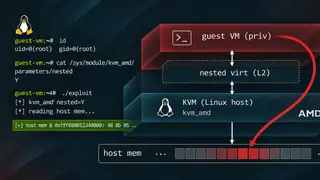
A flaw in the Linux KVM hypervisor, tracked as CVE-2026-99312, allows a guest virtual machine to access up to 127 GB of memory on an AMD-based host server. The vulnerability affects only systems with nested virtualization enabled and can expose data from other customers on shared cloud servers. Fixed kernel updates have been released to address the issue.
A critical vulnerability in the Linux KVM hypervisor, identified as CVE-2026-99312, has been discovered to allow a guest virtual machine on AMD-based host systems to access up to 127 GB of the host’s memory. This flaw is active only when nested virtualization is enabled, a configuration commonly used in cloud environments and development testing. The exposure could permit unauthorized access to sensitive data from other virtual machines running on the same physical server, posing a significant risk in shared cloud infrastructures. The issue affects only AMD systems and does not impact other processor architectures. Security updates have been released in updated kernel versions to patch the flaw, and users are advised to apply them promptly.
The vulnerability arises from a flaw in how the KVM hypervisor manages memory isolation between guest VMs and the host system under nested virtualization. This configuration, while useful for advanced virtualization use cases, introduces a rare but severe risk when memory access controls fail. The fact that the flaw is limited to AMD hardware and nested virtualization suggests it may have been overlooked during earlier security audits due to its narrow attack surface. The disclosure and patching process appear to have followed standard vulnerability management practices, with the fix now available in updated Linux kernel releases.
The primary stakeholders include cloud service providers, system administrators managing virtualized environments, and users relying on shared infrastructure. These groups have a strong incentive to apply the kernel updates to maintain data confidentiality and system integrity. The broader implications for trust in cloud computing remain unconfirmed, but the potential for data leakage across tenant boundaries could affect customer confidence. What remains unknown is the extent of real-world exploitation prior to the patch’s release and whether any breaches have already occurred.
This vulnerability could significantly impact cloud computing environments where multiple tenants share physical hardware, particularly those using AMD-based servers with nested virtualization. If exploited, it may lead to unauthorized access to sensitive data across customer boundaries, undermining the fundamental trust model of virtualized infrastructure. The risk is heightened in multi-tenant cloud services where isolation between users is paramount. The incident echoes earlier high-profile hypervisor flaws like Spectre and Meltdown, which also exploited hardware-level vulnerabilities to breach isolation between processes. While CVE-2026-99312 is more narrowly scoped, it underscores the ongoing challenges in securing complex virtualization layers. The broader market may see increased scrutiny of cloud provider security practices, potentially influencing procurement decisions. Users should monitor for updates and assess their exposure based on system configurations. The long-term effect may be a push toward more rigorous auditing of nested virtualization setups and greater adoption of hardware-enforced isolation mechanisms.