NASA Releases Sonified Sounds of Baby Stars Forming in Nebulae
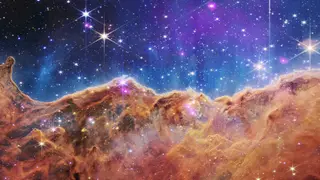
NASA has released a new album of sonified data from the Chandra X-ray Observatory, transforming observations of star formation into audible music. The recordings, created by SYSTEM Sounds, map X-ray, infrared, and optical data from regions like the Carina Nebula and Messier 82 into musical tones, allowing listeners to experience stellar birth. The project aims to make astrophysical data accessible and engaging through sound.
On November 22, 2026, NASA unveiled a new audio album derived from data collected by the Chandra X-ray Observatory, transforming visual and scientific observations of star formation into audible compositions. The project, developed in collaboration with SYSTEM Sounds, sonifies data from four distinct cosmic regions: the Carina Nebula, Messier 82, the area just below Orion’s belt, and other stellar nurseries. Each sonification maps X-ray, infrared, and optical data into musical tones—high-frequency sounds represent X-ray emissions, low drones correspond to infrared data, and visible light translates into varied melodic elements. In the Carina Nebula’s piece, individual baby stars are represented by distinct string notes, while the nebula’s towering gas structures are mirrored in shifting instrumental textures. The project’s creators, including M. Russo and A. Santaguida of SYSTEM Sounds, aim to make astrophysical phenomena accessible and emotionally resonant through sound. This initiative builds on earlier efforts to translate scientific data into sensory experiences, such as previous sonifications of black holes and galaxy clusters, but expands the scope to focus specifically on the birth of stars. The work is part of a broader push by NASA and scientific communicators to engage the public with complex data through creative, multisensory formats. While the immediate goal is public engagement and education, the long-term implications may include new methods for data analysis and collaboration across disciplines. What remains unclear is whether these sonifications will be used in formal research settings or remain primarily outreach tools.
This release could deepen public engagement with astrophysics by offering a novel, emotional entry point into complex cosmic processes. By translating abstract data into music, NASA and SYSTEM Sounds may help demystify scientific observation for non-experts, potentially inspiring interest in STEM fields among younger audiences. The project may also influence how scientific institutions approach public communication, encouraging more interdisciplinary collaborations between scientists, artists, and sound designers. A comparable precedent is the 2019 sonification of the Pillars of Creation, which similarly used data from the Hubble Space Telescope to create an auditory experience. That earlier effort demonstrated how sensory translation can generate widespread media attention and educational use. If this trend continues, it may lead to new standards in science communication, where data sonification becomes a routine part of public outreach. However, it remains uncertain whether such projects will affect research methodologies or be adopted by other space agencies. The broader impact may also extend to digital media and education platforms, where immersive, sensory-rich content could become more common. What to watch for is whether similar sonifications of other phenomena—such as planetary formation or dark matter distributions—will follow, and whether they will be integrated into classroom curricula or museum exhibits.