Wake Forest's Ranking Confuses Analysts Amid Chaotic Week of Results
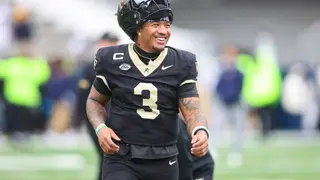
Wake Forest's placement in the rankings has become a point of debate after a volatile weekend that reshaped the standings. Teams like Oregon, Oklahoma, Iowa, and UCLA also face uncertainty in their current rankings. The CFN Top 25 update highlights the difficulty in assessing team value after such a dramatic week.
Wake Forest’s current position in the college sports rankings has sparked confusion among analysts following a highly unpredictable weekend of games that significantly altered the national landscape. The volatility of results across multiple conferences led to a reevaluation of team strength, with Wake Forest’s placement drawing particular scrutiny. Other teams, including Oregon, Oklahoma, Iowa, and UCLA, are also experiencing uncertainty in their respective rankings, reflecting a broader instability in the CFN Top 25. The recent shift in standings underscores how quickly perceptions of team value can change after a single week of intense competition, especially when upsets and unexpected outcomes disrupt established narratives. The lack of consensus among analysts highlights the challenges in maintaining consistent evaluation metrics amid such rapid changes.
The situation arises from a confluence of factors, including inconsistent performance patterns, injury reports, and scheduling anomalies that have made traditional ranking methodologies less reliable. Prior to this week, many analysts had already noted the difficulty in predicting outcomes due to evolving team dynamics and the increasing influence of transfer portal movements. The CFN Top 25 update, which serves as a key reference point for fans, media, and athletic departments, now reflects this uncertainty, prompting calls for more nuanced evaluation systems. The organizations involved—college athletic programs, media outlets like CFN, and ranking bodies—each have stakes in how teams are perceived, with implications for recruiting, media exposure, and postseason eligibility. However, no definitive resolution has emerged, and the next rankings update remains pending, leaving the current state of the standings in flux.
The confusion surrounding Wake Forest’s ranking and the broader instability in the CFN Top 25 could affect how fans, recruits, and sponsors perceive college sports’ competitiveness and fairness. When rankings shift dramatically after a single weekend, it may erode trust in the evaluation process, especially for younger athletes relying on these metrics to make career decisions. Institutions may respond by investing more in analytics teams or adjusting their scheduling strategies to minimize volatility. This situation echoes the 2019 college football season, when a series of upsets in the final weeks of the regular season led to widespread debate over playoff selection, ultimately influencing changes in the playoff format. The current scenario may prompt similar reconsideration of how rankings are calculated, particularly in light of increasing unpredictability. What to watch for next is whether media outlets or governing bodies will introduce more transparent or data-driven methods to stabilize rankings—could lead to a shift in how college sports are evaluated and consumed.