Hamas Executes Alleged Collaborator After Accusations of Involvement in Assassinations
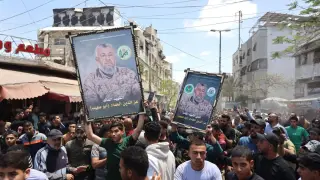
The Qassam Brigades, the armed wing of Hamas in Gaza, executed a former operative by firing squad for allegedly collaborating with Israel and contributing to the deaths of seven Qassam commanders, including his brother. The man was arrested in September after being seen near a strike site and was found to possess a modern iPhone during interrogation. The execution took place outside the Grand Mosque in Khan Younis, reflecting Hamas’s role as a de facto authority in parts of the Gaza Strip.
In early September, a former Qassam Brigades operative was arrested in Khan Younis after being seen near the site of an Israeli assassination strike targeting a senior commander in the Al-Aqqad Mosque area. Following interrogation, he was found to possess a modern iPhone, a detail that reportedly raised suspicion and contributed to his conviction. On a Sunday morning, he was executed by firing squad outside the Grand Mosque in Khan Younis, accused of collaborating with Israel and providing intelligence that led to the deaths of seven Qassam commanders, including his own brother. The execution occurred over a month after his arrest, with no public details on the trial process or his defense. The man had previously served as a unit commander and was later reassigned to relay messages, a role that placed him in close contact with field operations. Sources indicate he was recently recruited by Israeli intelligence, possibly within the past year, and had shared sensitive operational data on movement deployments and security apparatuses in Khan Younis. This incident follows a similar execution in May, when Hamas executed another alleged collaborator responsible for the killing of Qassam Brigades commander Izz al-Din al-Haddad. Hamas, which functions as a de facto authority in roughly 35–40% of the Gaza Strip, has carried out multiple such executions since the 2023 war, reflecting its internal security strategy amid ongoing conflict. The absence of transparency in proceedings and the lack of public record on due process remain unexplained. It is not known whether the accused had legal representation or if the verdict was reached through a formal tribunal.
The execution underscores Hamas’s use of extrajudicial punishment as a tool to maintain internal discipline and deter collaboration during wartime, a tactic that could deepen fear and mistrust within communities under its control. Civilians and former operatives alike may become more cautious in their movements and communications, potentially disrupting coordination among resistance groups. The presence of a modern smartphone, a symbol of digital connectivity, may be interpreted as a red flag in this context, highlighting how technology can be weaponized as evidence in security trials. This case bears resemblance to past instances in conflict zones like Syria or Afghanistan, where armed groups have used public executions to enforce loyalty and suppress dissent. The broader impact may include reduced willingness among Gazans to engage with any external actors, even those offering humanitarian aid, due to fear of being labeled collaborators. With Israel actively encouraging cooperation through leaflets and contact numbers, the risk of infiltration and betrayal is heightened. The possibility of further executions in Khan Younis suggests a pattern of escalating internal security measures. What remains unclear is whether these actions are intended to strengthen cohesion or signal power to external audiences. Monitoring future developments could reveal whether such tactics will be scaled up or if internal dissent begins to surface.