Apollo and Goldman Sachs spearhead $44 billion funding round for SpaceX to acquire Nvidia Vera Rubin GPUs
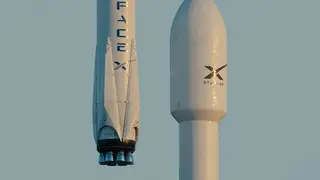
A $44 billion financing deal led by Apollo and Goldman Sachs will enable SpaceX to purchase Nvidia's Vera Rubin GPUs. The funds are intended to support SpaceX's growing computational infrastructure needs. This investment underscores the increasing demand for high-performance computing in space and satellite operations.
A $44 billion financing round, led by Apollo and Goldman Sachs, has been secured to support SpaceX’s acquisition of Nvidia’s Vera Rubin GPUs. This funding marks a significant escalation in the race for advanced computational power, particularly in the context of space-based operations and satellite networks. The specific details of the transaction—such as the exact number of GPUs, delivery timelines, or the final price per unit—remain unspecified in the available information. However, the scale of the investment signals a strategic commitment to bolstering SpaceX’s infrastructure for data processing, machine learning, and real-time satellite communications.
The move reflects a broader trend in the technology sector, where high-performance computing is becoming a critical enabler for next-generation space systems. SpaceX’s growing fleet of Starlink satellites, along with its ambitions in crewed missions and orbital infrastructure, demands immense computational capacity. The Vera Rubin GPUs, known for their capabilities in handling large-scale data and AI workloads, are expected to play a central role in optimizing these operations. This investment is not isolated but part of a larger pattern of tech and finance convergence, where private capital is increasingly fueling innovation in aerospace and AI.
The key players involved are Apollo and Goldman Sachs, which are acting as lead financiers, and SpaceX, which is the beneficiary and end-user of the technology. While the motivations of the financial institutions are likely tied to returns on high-stakes investments, SpaceX’s goal is to maintain technological leadership in space. The extent of Nvidia’s role—whether as a direct supplier or through a structured partnership—is not detailed. What remains unclear is how this acquisition will affect Nvidia’s broader GPU supply chain, whether other aerospace firms will follow suit, and how regulatory bodies may view such concentrated investments in dual-use technology.
This development could significantly influence the trajectory of space-based data infrastructure, potentially accelerating the deployment of AI-driven satellite systems. As SpaceX enhances its computational capabilities, it may gain a competitive edge in real-time data processing for global internet services, Earth observation, and defense applications. The involvement of major financial institutions like Apollo and Goldman Sachs suggests that high-risk, high-reward tech ventures are becoming mainstream investment targets. This may encourage other private space ventures to pursue similar funding models, reshaping the economics of space innovation. A comparable precedent is the 2018 funding round for SpaceX that enabled the development of the Starlink constellation, which similarly combined private capital with advanced technology. However, this new investment is unprecedented in scale and focus on AI hardware. The broader impact may ripple through semiconductor markets, where demand for specialized GPUs could intensify. It also raises questions about data sovereignty, surveillance, and the concentration of technological power in a few private entities. What to watch for next is whether this funding model becomes a template for other space-tech firms, and how governments might respond to the growing influence of private actors in critical infrastructure.