Chubu Electric Invests $145 Million in India’s Continuum Green Energy
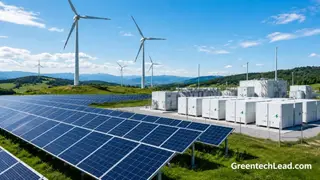
Japan’s Chubu Electric Power completed a ₹1,350 crore ($145 million) investment in Continuum Green Energy, an Indian renewable-energy producer. The company operates wind, solar, and hybrid projects serving commercial and industrial customers in India. The investment follows prior backing from an affiliate of Generation Investment Management and will support Continuum’s next phase of expansion.
On November 20, 2026, Japan’s Chubu Electric Power completed a ₹1,350 crore ($145 million) investment in Continuum Green Energy, an Indian renewable energy developer specializing in wind, solar, and hybrid projects. The investment supports Continuum’s next phase of expansion, focusing on serving commercial and industrial electricity customers across India. This move follows earlier backing from an affiliate of Generation Investment Management, the firm co-founded by former U.S. Vice President Al Gore, signaling growing international confidence in India’s renewable energy sector. Continuum was founded by Arvind Bansal and Vikash Saraf, and its operations are centered on delivering clean power through utility-scale installations. Chubu Electric, Japan’s third-largest electric utility, operates across electricity generation, transmission, and distribution, and this investment marks its strategic entry into India’s rapidly expanding renewable market.
The transaction reflects a broader trend of Japanese energy firms diversifying beyond domestic markets and investing in high-growth clean energy regions. While the article does not specify the ownership structure post-investment, it implies a partnership aimed at scaling Continuum’s portfolio. The investment may also signal Chubu Electric’s intent to strengthen its global renewable footprint amid Japan’s own energy transition challenges. What remains unclear is the exact equity stake Chubu Electric acquired, the timeline for project delivery, or how this will affect Continuum’s existing partnerships. Regulatory or market conditions in India could also influence the pace of expansion, though no such hurdles are mentioned in the text.
This investment could strengthen India’s renewable energy infrastructure by bringing in foreign capital and technical expertise, potentially accelerating the country’s decarbonization goals. Commercial and industrial customers in India may benefit from more stable, lower-cost clean power, especially as corporate sustainability demands grow. The involvement of a major Japanese utility like Chubu Electric may also encourage other Japanese firms to follow, reinforcing Indo-Japanese economic ties in green technology. A comparable precedent is the 2020 investment by SoftBank in India’s renewable sector, which helped scale solar projects across multiple states. However, unlike that case, this transaction is not tied to a massive infrastructure rollout but rather to a specialized, customer-focused model. What may unfold next is increased competition among international investors in India’s clean energy space, particularly in hybrid and storage-integrated projects. Monitoring how Continuum integrates this capital into project execution will be key to assessing its long-term impact.