Cyber Warfare Targeted at Societal Morale, Expert Warns
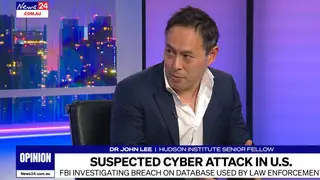
John Lee, a national security analyst at the Hudson Institute, argues that modern cyber warfare aims not just at infrastructure but at undermining public morale and societal cohesion. He emphasizes that psychological disruption is a core objective of state-sponsored cyber operations. The analysis underscores the evolving nature of conflict in the digital age.
John Lee, a national security analyst at the Hudson Institute, has highlighted a shift in the objectives of modern cyber warfare, asserting that state-sponsored cyber operations increasingly target societal morale and public cohesion. While traditional cyber attacks focus on disabling critical infrastructure, Lee emphasizes that psychological disruption has become a central aim. This evolution reflects a broader transformation in how nations engage in conflict, where destabilizing trust in institutions and sowing discord among populations can be as effective as physical destruction. The analysis underscores that these operations are not limited to technical breaches but are designed to erode confidence in democratic processes, media, and government legitimacy. No specific incidents, dates, or geographic locations are cited in the available material, but the warning points to a growing trend in digital conflict that prioritizes influence over infrastructure.
The background to this shift lies in the increasing sophistication of digital tools and the vulnerability of information ecosystems. As governments and private entities rely more heavily on interconnected systems, the potential for non-kinetic warfare to achieve strategic outcomes has expanded. The Hudson Institute, a prominent think tank, provides a platform for such analysis, reflecting broader policy concerns about hybrid threats. Lee’s perspective aligns with growing recognition that cyber campaigns can be used to manipulate public perception, amplify polarization, and undermine social stability. The people involved—analysts like Lee, policymakers, and intelligence agencies—seek to understand and counter these emerging threats. However, the specific methods, targets, or attribution of such operations remain unclear in the provided information. What is unresolved is how governments will adapt their defense strategies to address psychological warfare, and whether new international norms or legal frameworks will emerge to govern these tactics.
The warning from John Lee could signal a broader recalibration in how governments assess national security threats, shifting focus from infrastructure protection to societal resilience. If psychological disruption is indeed a primary goal of cyber operations, then public trust in institutions—media, elections, and government—may become a key battleground. This could affect civil society organizations, tech platforms, and even educational systems, which may need to bolster efforts to counter disinformation. The impact may ripple through democratic processes, potentially weakening civic engagement and increasing susceptibility to manipulation. A comparable earlier case is the use of propaganda during the Cold War, where information campaigns sought to influence public opinion across borders. However, today’s digital environment allows for faster, more targeted, and harder-to-trace operations. What to watch for next is whether governments will invest more in public awareness campaigns, strengthen digital literacy, or develop new metrics to assess societal cohesion as a national security indicator. The long-term implications for governance and public trust remain uncertain.