Rockstar Open to Selling Red Dead Redemption Movie Rights for $100 Million
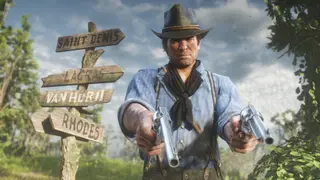
Rockstar Games is reportedly willing to sell adaptation rights for Red Dead Redemption to film studios for $100 million, despite refusing to allow a movie adaptation of Grand Theft Auto. The decision comes as the company remains firm in its stance against adapting GTA, while showing interest in bringing Red Dead Redemption to the big screen.
Rockstar Games has reportedly opened negotiations to sell the film and television adaptation rights for Red Dead Redemption to studios for $100 million, according to a report from The Ankler published on November 23, 2026, just one day before the release of GTA 6. This move stands in stark contrast to the company’s firm stance against adapting Grand Theft Auto, which remains off-limits for any cinematic or television project. The Red Dead franchise, while not as commercially dominant as GTA, is considered Rockstar’s second most successful series and is known for its deeply narrative-driven, linear storytelling—qualities that may make it more amenable to adaptation than the open-ended, player-driven chaos of GTA. The $100 million asking price is notably lower than the $800 million reportedly paid by Xbox for exclusive rights to its major IPs, and significantly less than Amazon’s $250 million investment in The Lord of the Rings: The Rings of Power. The agent cited in the report, who works with video game writers, confirmed Rockstar’s active interest in finding a partner to bring Red Dead Redemption to the screen. Rockstar is expected to maintain tight creative control over any adaptation, likely ensuring the project aligns with the tone and legacy of the original games. The decision comes amid growing industry momentum around video game adaptations, though many have underperformed or failed to capture the source material’s essence—such as the Halo series on Paramount. What remains unclear is whether Rockstar will allow a sequel to Red Dead Redemption to be adapted if a third game is released, or how much creative autonomy studios will be granted.
The move signals a strategic pivot in how Rockstar approaches its intellectual property, favoring narrative-rich franchises over open-world, player-driven ones for cinematic adaptation. This could influence how other game developers view their own IPs—especially those with strong story arcs—potentially encouraging more studios to explore film and TV opportunities for their most emotionally resonant titles. The contrast between Red Dead Redemption’s openness and GTA’s intransigence may also shape audience expectations: fans may come to see narrative-driven games as more “adaptable” than sandbox experiences, even if the latter are more popular. A comparable precedent is the success of The Last of Us series, which leveraged a deeply personal story to justify a high-budget HBO adaptation. If Red Dead Redemption’s film or series succeeds, it could validate the model of high-priced, tightly controlled adaptations for mature, story-focused games. However, if it fails to meet expectations, it may reinforce skepticism about video game adaptations in general. What’s next could include bidding wars among studios, or Rockstar’s eventual decision to develop the project internally. The broader impact may be a shift in how publishers monetize IP beyond games—especially as streaming platforms seek original content with built-in fanbases.