Ericsson Demonstrates Tactical 5G Network for Real-Time Military Drone Defense
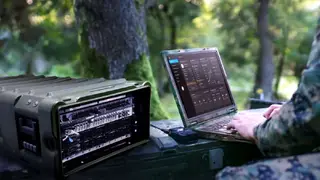
Ericsson tested a tactical 5G network during Spain’s Atlas 26 military exercise, enabling the Spanish Armed Forces to link counter-drone and air-defense systems wirelessly for the first time. The trial used Ericsson’s Ultra Compact Core and military-exclusive radio frequencies to ensure secure, low-latency communication. The system allowed real-time data sharing, improving coordination and response speed against aerial threats.
In November 2026, Ericsson conducted a live demonstration of a tactical 5G network during Spain’s Atlas 26 military exercise, marking the first time the Spanish Armed Forces used a wireless 5G system to link counter-drone (C-UAS) and air-defense systems without relying on physical cables. The trial leveraged Ericsson’s Ultra Compact Core—a mobile, hardened 5G system designed for military deployment—combined with military-exclusive radio frequencies to ensure secure, low-latency communication. The network was operated by the 5G Spanish Cyber Defence Centre, part of the Joint Cyberspace Command, and enabled real-time data sharing across distributed defense assets. This breakthrough allows rapid deployment and reconfiguration of defense infrastructure in dynamic combat environments, reducing reliance on fixed infrastructure. The use of dedicated military frequencies minimized interference and congestion, a critical factor in high-stakes operations. Juan Olivera, Ericsson Spain’s County Manager, emphasized that this deployment demonstrates how commercial 5G innovations, adapted for defense, can provide a decisive operational advantage by enabling seamless coordination between sensors and effectors. The success of this trial builds on earlier efforts, such as Ericsson’s ISAC drone detection technology tested in Poland, and reflects a broader trend of integrating civilian telecom advancements into military systems. What remains unclear is whether this system will be adopted for broader NATO interoperability or scaled beyond Spain, and how long it will take for similar tactical 5G networks to be fielded by other nations.
The integration of 5G into military operations could significantly reshape battlefield dynamics by enabling faster, more coordinated responses to aerial threats like drones. This development may set a precedent for other nations to adopt sovereign, mobile 5G networks for defense, potentially accelerating a shift from legacy wired systems to agile, wireless architectures. The success of Spain’s trial could influence defense procurement strategies across Europe, especially as countries seek to modernize their cyber and electronic warfare capabilities. A comparable earlier case is the U.S. military’s early adoption of commercial satellite and broadband technologies during conflicts in Iraq and Afghanistan, which similarly transformed command and control. However, unlike those cases, this 5G deployment is not just about connectivity—it’s about real-time sensor-to-effector coordination, which could redefine how forces engage in contested airspace. The broader societal impact may include increased public scrutiny of military use of civilian telecom infrastructure, especially around privacy and surveillance risks. As 5G becomes more embedded in defense systems, concerns about supply chain security and foreign dependency—particularly with non-domestic vendors—may grow. What to watch for next is whether other NATO members will replicate this model, and how quickly commercial 5G vendors will adapt their products for military use under strict security standards.