NASA's Roman Telescope to launch with hardware salvaged from defunct spy satellite program
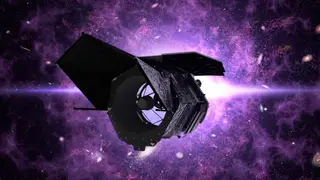
The Nancy Grace Roman Space Telescope, set to launch on Aug. 30, incorporates optical components originally built for a canceled National Reconnaissance Office spy satellite project. The Future Imagery Architecture program, contracted to Boeing, was abandoned in 2005 after billions in cost overruns. NASA repurposed the telescope assembly to study dark energy and exoplanets.
The telescope's Optical Telescope Assembly contains its primary mirror, nine additional mirrors, supporting structures, and electronics — all originally built for the National Reconnaissance Office's Future Imagery Architecture program. Boeing contracted for that spy satellite project in 1999, but the effort collapsed in 2005 after billions in cost overruns, with the New York Times calling it a spectacular failure in American spy satellite history.
NASA received two unused telescopes from the defunct program in 2012, roughly two years after Roman (then WFIRST) was first proposed. The 2010 National Academy of Sciences Decadal Survey had already ranked the mission as its top priority. The donated optics, similar in capability to Hubble's, helped offset costs, though reworking the hardware and building the rest of the observatory still required substantial investment.
The Roman telescope's repurposed spy hardware demonstrates how failed military programs can yield unexpected scientific dividends. The mission could significantly advance dark energy research and exoplanet discovery, potentially reshaping cosmological understanding. Society may benefit from new astronomical knowledge, while the cost-saving approach