Single Impact Could Account for Deimos's Depression and Dusty Surface
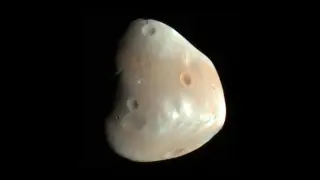
Researchers used simulations and Hera spacecraft data to propose that a 320-meter asteroid struck Deimos at an angle. The collision would have thrown debris across the moon without destroying it, explaining its smooth regolith and southern depression. The findings may inform future missions like JAXA's MMX.
The Bern SPH code, refined over roughly two decades, models collisions by representing objects as millions of individual particles, allowing researchers to adjust gravity, density, and material strength. This same simulation approach previously recreated NASA's DART spacecraft impact on Dimorphos, lending credibility to the Deimos findings. Hera's flyby data, gathered while the spacecraft transited toward its primary target, provided the first observational constraints for this scenario, suggesting Deimos is more porous and fragile than previously assumed. The proposed 320-meter impactor struck at an angle, ejecting debris globally without shattering the moon—a delicate balance that explains both the southern depression and the uniform regolith layer.
This research could sharpen the scientific targets for JAXA's MMX mission, potentially influencing sample-collection site selection and instrument priorities. If Deimos's surface is indeed globally redistributed impact debris, returned samples may reveal subsurface material from a single ancient collision, offering a cleaner window into Mars's early history. The findings may also refine how scientists assess impact risks for small, porous bodies elsewhere, with implications for asteroid deflection strategies and future human exploration of the Martian system.