Federer laments fading artistry of one-handed backhand at US Open
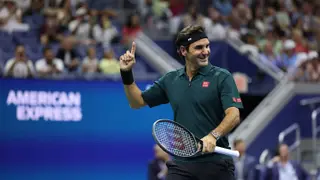
At the 2026 US Open, Roger Federer discussed the near-extinction of the one-handed backhand in elite tennis, noting that no top-10 player has used it since February 2024. He cited the sport's emphasis on power and speed as driving the decline, while he practiced with Lorenzo Musetti, one of the few remaining practitioners. Federer described the trend as a loss of artistry, calling it a precious relic in the modern game.
The one-handed backhand's decline became statistically undeniable in February 2024, when the ATP's computerized rankings—used since August 1973—showed zero top-10 players employing the stroke for the first time. That systemic gap has persisted and widened, with only a handful of top-100 competitors still using it. Stefanos Tsitsipas and Grigor Dimitrov remain notable holdouts, while Lorenzo Musetti drew Federer's personal attention during a US Open practice session.
Federer traced the root cause to coaching pipelines: roughly ninety percent of his childhood instructors played one-handed, whereas today's academy coaches overwhelmingly teach the two-handed version they grew up with. He also observed the struggle firsthand through his own son, who is attempting the difficult transition from two-handed to one-handed technique—a steep biomechanical learning curve that conflicts with modern tennis's demand for immediate competitive results.
This story could influence how tennis academies and parents approach youth development, potentially prompting renewed debate about whether aesthetic strokes deserve preservation at the expense of competitive efficiency. Young players may feel pressure either way—to adopt the statistically dominant two-handed style or to emulate Federer's artistry. Broadcasters and fans who value tennis's visual tradition could see the sport's identity shift, while coaches might reconsider how much weight to give tradition versus measurable performance outcomes.