A 1970s French Resort Town Gains New Popularity Among Architecture Enthusiasts
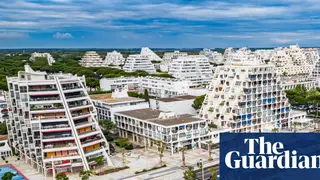
La Grande-Motte was built in the 1960s and 1970s to discourage French holidaymakers from travelling to Spain. Its design, inspired by Mayan pyramids and futuristic curves, now attracts visitors interested in postwar architecture. The author describes his visit to the town and its distinctive retro-futurist character.
Jean Balladur, the architect behind La Grande-Motte, drew on Mesoamerican pyramid forms and imagined a 1970s vision of the 21st century, resulting in a townscape of curved buildings and pyramid-shaped apartment blocks. The resort was part of a broader French government effort to develop new beach towns along the windswept coast between Montpellier and Perpignan, offering an alternative to the Côte d'Azur and discouraging holiday travel to Spain.
The town's design prioritizes pedestrians and cyclists, with thousands of trees planted throughout and a solar-powered ferris wheel at Point Zéro, the site of its earliest construction. Concrete sculptures by artist Joséphine Chevry, inspired by wartime sound mirrors, were built to shape dunes and serve as wind breakers, though many are now buried in sand. The beach earned a Blue Flag award for environmental management in 2025.
This story reflects a growing niche of "architourism" that could reshape how smaller postwar developments are valued. As grandchildren of original buyers rediscover La Grande-Motte, similar mid-century planned communities may see renewed interest, potentially boosting local economies through heritage-focused tourism. However, increased attention could also strain infrastructure or spark debates about preserving versus modernizing these distinctive structures. The trend may encourage other towns to highlight their architectural legacies, though its broader economic impact likely remains modest outside dedicated enthusiast circles.