Shenzhen urged to leverage industrial strengths in AI-driven scientific discovery
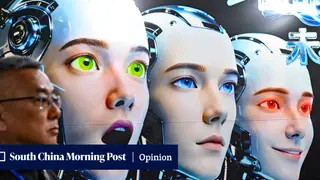
An opinion piece argues that Shenzhen should not mimic Beijing or Shanghai's research-focused AI strategies. Instead, it should capitalize on its high R&D intensity and company-led innovation to become a hub for AI experimentation and deployment. The article highlights Shenzhen's 245.31 billion yuan R&D investment in 2024, with over 93% from companies.
Shenzhen's 2024 R&D spending of 245.31 billion yuan represents the highest research intensity among Chinese cities, with companies funding over 93 percent of that total. This corporate-driven model contrasts sharply with Beijing's planned scientific-intelligence infrastructure and Shanghai's "Hundred Teams, Hundred Projects" initiative, which offers up to 70 percent investment support capped at 50 million yuan per project.
The article's author, Dr. Shaoshan Liu, directs embodied AI work at the Shenzhen Institute of Artificial Intelligence and Robotics for Society. He positions Shenzhen's advantage in the close proximity between research, engineering, and commercial deployment, arguing the city should focus on turning algorithms into reliable scientific tools rather than pursuing research leadership alone. The piece also references the U.S. Department of Energy's Genesis Mission, which links 17 national laboratories with Japan as a partner.
This strategic positioning could reshape how Chinese cities approach AI development, potentially accelerating the practical application of scientific discoveries in industrial settings. Companies in Shenzhen may benefit from faster commercialization of research, while researchers elsewhere might see funding patterns shift toward corporate priorities. The emphasis on deployment over pure research could influence job markets, favoring engineers and applied scientists over theoretical researchers. However, this approach may also narrow the scope of scientific inquiry, prioritizing commercially viable projects over foundational research with longer timelines.