European defense industry seeks to highlight civilian spin-offs to boost public support
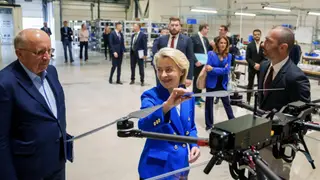
The European defense industry is experiencing a surge in spending and investment, with turnover up significantly in the U.K. and EU. It aims to emulate NASA's success in publicizing civilian applications of its technology, such as infrared cameras and other innovations. The industry hopes to demonstrate its economic benefits, including well-paid jobs and productivity gains.
The defense sector's economic footprint extends well beyond weapons manufacturing, with civilian applications ranging from submarine-derived ultrasound technology now serving energy infrastructure to drone systems mapping national power grids. These transfers represent a deliberate strategy, supported by initiatives like the U.K.'s TAG Alliance and France's Agence Innovation Defense, which explicitly encourage dual-use development. NATO's DIANA accelerator performs a similar function across member states.
Historical precedent supports this approach: infrared cameras originated as British anti-aircraft technology in the 1920s, and Google's development benefited from U.S. defense funding. The industry's productivity advantage—roughly a quarter above national averages—and its concentration in regions affected by manufacturing decline give it particular economic significance as European governments increase security spending.
This push for public recognition could reshape how European citizens perceive defense spending, potentially reducing protest movements and political opposition. Communities in manufacturing-heavy regions may benefit most, as defense investment creates well-paid jobs and productivity gains that support local economies. However, the framing could also normalize military expansion, influencing public acceptance of increased defense budgets and potentially shifting political discourse around security policy in ways that affect civil liberties debates and international relations.