Nepal flood likely from glacial and rock avalanche; climate change may increase such events
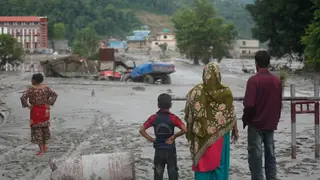
A massive flood in Nepal and Tibet has killed hundreds and left over 1,400 missing, likely caused by a glacial collapse that triggered a wave of ice, water, and debris. Satellite imagery indicates a large rock avalanche may have carried part of a glacier, blocking a river and releasing the flood. Scientists warn that climate change could make such glacial and rock avalanches more frequent.
The disaster originated near Lantang Lirung, a Himalayan peak in the Langtang Valley, where satellite data suggests a massive bedrock landslide carried part of a glacier into the Lende Khola river. This blockage likely released a sudden wave of ice, water, and debris that traveled over 100 kilometers downstream. Seismic readings initially hinted at an earthquake, but the U.S. Geological Survey attributes the magnitude 5.2 signal to the landslide itself. Scientists estimate hundreds of millions of tons of material collapsed, with the event’s scale described as “really shocking” by researchers.
Glacial collapses occur when ice, rock, and debris detach abruptly from a mountain glacier, gaining speed and heat that accelerates melting. The exact role of climate change remains unclear, but warming is known to destabilize glaciers and the slopes supporting them, especially in the Himalayas. A 2023 UN report highlighted this growing vulnerability, though specific triggers for this event are still under investigation.
This catastrophe could reshape disaster preparedness in mountainous regions, as communities downstream face heightened risk from similar glacial and rock avalanches. Scientists may push for better monitoring of unstable slopes and glacial lakes, but limited resources in remote areas could delay implementation. The event may also intensify public concern about climate change’s role in extreme natural disasters, influencing policy debates on adaptation and early-warning systems. However, the precise link to warming remains uncertain, so responses should balance precaution with scientific caution.