Pentagon's European Force Review Faces Political Hurdles
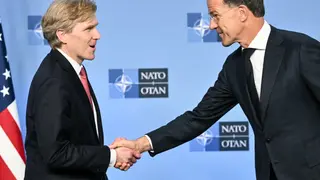
The Pentagon has initiated a six-month assessment of US troop deployments in Europe, aiming to shift conventional defense responsibilities to European allies. However, the effort faces opposition from Congress, host nations, and President Trump, which could limit any major reductions. The review, led by policy chief Elbridge Colby, is part of a broader initiative called NATO 3.0.
The review covers roughly 80,000 US service members stationed across Europe, with Germany hosting nearly half. Additional basing exists in the UK, Spain, Italy, Poland, Romania, Greece, and Estonia. These installations serve dual purposes: protecting host nations while also enabling US power projection into Africa and the Middle East through airfields, naval facilities, and medical hubs.
Colby's push for a strategic pivot toward Asia reflects his long-held view that China poses the primary threat. His "NATO 3.0" initiative gains momentum from President Trump's frustration with European allies declining to participate in the Iran conflict. However, the political landscape—including congressional resistance and host-nation concerns—suggests any significant troop reductions face substantial obstacles.
This review could reshape the transatlantic security relationship, affecting roughly 80,000 US personnel and their families stationed in Europe, as well as local economies dependent on military bases. European allies may face pressure to increase defense spending, potentially straining domestic budgets. A significant drawdown could also alter US power projection capabilities into Africa and the Middle East. However, given the political opposition from Congress and host nations, the review may ultimately produce only modest adjustments rather than the sweeping changes some officials envision.