Glacial collapse triggers deadly floods along Nepal-China border, hundreds missing
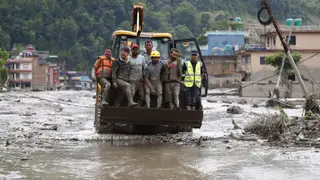
A glacier collapse on the Nepal-China border unleashed a massive flood and mudslide that killed at least 360 people and left over 1,400 missing. Rescue operations are underway, but destroyed bridges and roads are complicating efforts to reach affected communities. The disaster underscores the growing risks of melting glaciers due to climate change.
The disaster struck across multiple districts in Nepal and Tibet, with Nuwakot district in Nepal and Shigatse prefecture in Tibet among the hardest hit. A newly formed lake at the confluence of two rivers is overflowing and may burst, raising concerns about additional flooding. The Trishuli hydropower project also trapped people who required evacuation.
Rescue operations involve military helicopters from both Nepal and China, with over 500 military personnel deployed on the Chinese side. The United Nations has released $2 million in emergency funding for medical care, shelter, and water. The disaster has displaced roughly 1,200 people from at least three villages in Nepal alone.
This disaster could reshape how Himalayan nations approach infrastructure development and disaster preparedness in high-altitude regions. Communities dependent on mountain waterways for livelihoods and energy may face prolonged disruption, while the scale of missing persons could strain local governance and international aid systems. The event may also intensify global pressure on climate adaptation funding for vulnerable mountain regions, as melting glaciers become an increasingly visible consequence of warming temperatures.