Seven shark species' teeth unearthed in Egypt's desert reveal ancient marine past
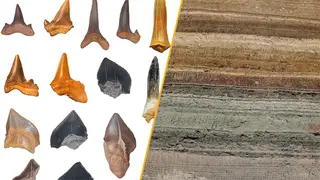
Paleontologists have identified fossilized teeth from at least seven distinct shark species in an Egyptian desert locality. The find indicates that the region once hosted a marine ecosystem, offering fresh clues about its prehistoric environment. These specimens contribute to understanding the area's complex geological and biological history.
The fossilized teeth, recovered from a single desert locality, point to a once-thriving marine environment in what is now arid Egyptian terrain. Because shark skeletons are cartilaginous and rarely fossilize, teeth often serve as the primary evidence for identifying ancient species and reconstructing past ecosystems. The presence of at least seven distinct species suggests a biologically rich prehistoric seaway. This discovery adds to a growing body of evidence that the Sahara region periodically hosted shallow seas, shaped by shifting geological and climatic conditions over deep time. Each specimen helps paleontologists refine timelines of marine transgression and regression in North Africa, contributing to broader reconstructions of the area's complex environmental history.
This discovery could reshape public understanding of how dramatically landscapes change over geological timescales, showing that today's deserts once supported diverse marine life. It may interest educators, students, and science enthusiasts, offering a tangible example of deep-time environmental transformation. For researchers, the find could refine regional paleoecological models and guide future fieldwork. The story may also enhance Egypt's scientific profile, potentially attracting tourism or research interest, though such effects remain speculative.