Conflict in Myanmar Fails to Halt Rare-Earth Extraction
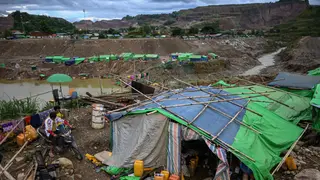
Despite the Kachin Independence Army seizing Pangwa, the hub of Myanmar's rare-earth industry, in 2024, production has continued almost unimpeded. Myanmar supplies an estimated 16 percent of global rare-earth output and nearly half of heavy rare earths, which are critical for defense and green energy. This demonstrates how supply chains can adapt to fragmented political orders during war.
The article notes that Myanmar supplies roughly 16 percent of global rare-earth output and nearly half of heavy rare earths, which are vital for defense and green energy sectors. Most extraction occurs in Kachin state, with minerals shipped to China for processing. The Kachin Independence Army's 2024 seizure of Pangwa shifted control but did not interrupt production.
Chinese actors engage with multiple parties in Myanmar's fragmented political landscape—military authorities, ethnic armed groups, militias, borderland elites, and business intermediaries. This multi-pronged approach allows supply chains to function despite instability. Environmental costs are significant, as stricter Chinese regulations pushed damaging mining operations into northern Myanmar, where oversight is weak.
The continued flow of rare earths from Myanmar's conflict zones could reinforce the resilience of China-dominated supply chains, potentially reducing incentives for Western nations to diversify sources. Defense and green technology manufacturers may find it difficult to verify mineral origins, raising accountability concerns. Communities near mining sites could face ongoing environmental and health impacts, while armed groups may gain financial leverage through resource control, potentially prolonging conflict dynamics.