Unveiling the universe's first light and the cosmologist's role as storyteller
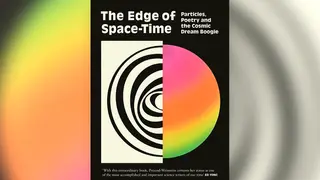
The extract describes the cosmic microwave background as the earliest light in the universe, traveling for nearly 14 billion years. The author argues that studying cosmology is akin to being a griot, preserving and sharing the story of the universe's origins. This cosmic edge represents a fundamental limit to what we can observe.
The cosmic microwave background marks the earliest moment when the universe became transparent, allowing photons to travel freely after being trapped in a dense plasma of particles. This radiation has journeyed for nearly 14 billion years, predating the formation of the sun and Earth, yet humanity has only detected it for 82 years.
Prescod-Weinstein frames cosmology as a storytelling practice, comparing the cosmologist's role to that of a griot in West African tradition. She draws on an Akan proverb about retrieving forgotten knowledge and connects physics to artistic traditions, citing Milford Graves's explorations of "cosmic energy" through percussion and observation. Her book positions physics within overlapping forms of knowing.
This framing may broaden public engagement with cosmology by presenting it as cultural heritage rather than purely technical pursuit. Readers who feel excluded from physics could find entry points through the book's emphasis on marginalized perspectives and artistic connections. The work may influence how science communication reaches diverse audiences, potentially expanding who sees themselves as participants in scientific inquiry and how scientific knowledge is valued across communities.