University achieves first captive echidna birth, offering clues to mammalian evolution
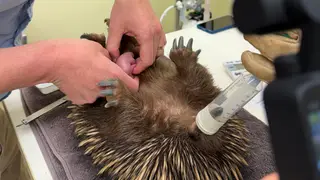
Researchers at Macquarie University in Sydney have successfully bred and reared a short-beaked echidna, a rare feat in captivity. The newborn, called a puggle, was briefly removed from its mother's pouch for weighing, marking a milestone for the research colony. Scientists plan to study the egg's chemistry to compare monotreme and reptile eggshell proteins, potentially illuminating when mammals diverged from reptiles.
The puggle, offspring of a female named Kootear, weighed 36 grams at its first examination outside the pouch. The research colony at Macquarie comprises nine adults—five females and four males. The team noticed Kootear's reduced activity and appetite roughly ten days before the egg was laid, a behavioral signal they used to anticipate the birth.
Monotremes represent an ancient mammalian branch, with only five living species worldwide. Griffith's team intends to analyze eggshell proteins from echidnas against those of reptiles to determine whether these structures share a common evolutionary origin or arose independently. This comparison could clarify the timeline of mammalian divergence from reptilian ancestors.
This achievement could deepen understanding of mammalian reproductive evolution, potentially informing conservation strategies for other egg-laying species. Researchers studying monotreme biology may gain insights applicable to broader questions about pregnancy mechanisms. The success may also encourage further captive breeding programs, though echidnas remain challenging subjects. Society could benefit