Opinion: Trump's trade demands undermine negotiation principles
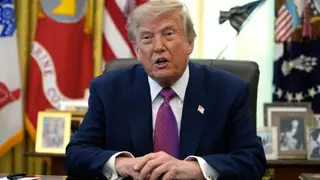
An opinion piece argues that President Trump's trade policy wrongly expects the U.S. to receive the best terms from other countries without offering concessions in return. The authors point to disputes with Brazil and Canada where Washington complains about preferential deals given to other nations. They contend this approach discourages countries from making concessions to the U.S. in the first place.
The article highlights two concrete trade disputes. In Brazil, the USTR's Section 301 investigation targets "partial scope" agreements Brazil maintains with Mexico and India, which lower tariffs on select products and give those exporters advantages over American competitors across hundreds of tariff lines. With Canada, Washington invoked Section 338 of the Tariff Act of 1930, objecting that European cheese receives preferential access under the Canada-EU trade deal compared to U.S. dairy under USMCA.
The authors note that even Section 338's original architects recognized limits on claiming preferences others negotiated. They draw a contrast with bilateral investment treaties, where most favored nation clauses are explicitly bargained for and can be refused or compensated. Here, Washington applies the concept retroactively without consent, using tariff threats as enforcement—an approach the authors argue discourages countries from offering concessions to the U.S. in the first place.
This dispute could reshape how other nations approach trade negotiations with Washington. If countries believe the U.S. will later claim whatever preferences they grant to third parties without offering compensation, they may offer less at the bargaining table. This could slow trade liberalization, create uncertainty for businesses that rely on predictable trade rules, and strain alliances with key partners like Brazil and Canada. The approach may also undermine the WTO framework that governs global commerce, potentially affecting supply chains and diplomatic relations