North Korea's Ukraine Combat Experience Strains US-South Korea Defense Ties
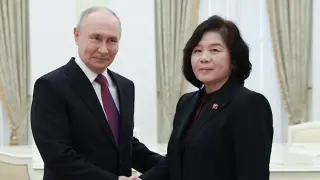
President Trump's decision to reduce the scale of the Ulchi Freedom Shield exercise with South Korea comes as North Korea gains battlefield experience from its involvement in Russia's war in Ukraine. Russian forces recently used North Korean ballistic missiles in an attack on Zaporizhzhia, and Pyongyang conducted its own missile launch. These developments complicate US and South Korean military planning for potential conflict in Northeast Asia.
The scaled-back Ulchi Freedom Shield exercise was designed to incorporate modern warfare elements including drone operations, GPS disruption, and cyber threats. These drills were meant to prepare for a North Korean military that has been refining its capabilities through direct combat involvement in Ukraine, where Russian forces have deployed Pyongyang's ballistic missiles against civilian targets.
Washington's strategy, outlined in its 2025 National Security Strategy and 2026 National Defense Strategy, emphasizes burden-sharing with wealthy allies. This approach assumes regions can be managed separately, but North Korea's integration with Russia's war effort demonstrates how conflicts in Europe and Asia are becoming interconnected, complicating the division of defense responsibilities.
The reduced scale of joint military exercises could affect regional stability perceptions in Northeast Asia. South Korean citizens may feel less protected as their primary security partner signals reduced commitment, while North Korea's battlefield experience could embolden its leadership. The situation may also pressure South Korea to increase defense spending and reconsider its own military posture, potentially reshaping public debate about security priorities in the region.