New Book Offers Fresh Perspective on the Fermi Paradox and Alien Searches
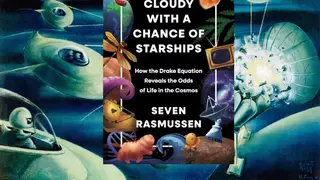
The article features an interview with astrobiologist Seven Rasmussen about their new book, which examines the Drake equation and its role in modern astrobiology. Rasmussen discusses how the equation tracks evolving scientific frontiers and the challenges of defining intelligent life. The book also reflects on how the search for extraterrestrial neighbors mirrors humanity's own self-image.
The Drake equation, introduced by Frank Drake in 1961, emerged from his preparation for the first SETI radio telescope search and a related conference. Its seven factors progress from relatively well-established astronomical data, such as galactic star formation rates, through uncertain planetary statistics, to deeply speculative terms involving the probability of intelligent life emerging and the average longevity of technological civilizations—the latter being entirely beyond current knowledge.
Rasmussen characterizes astrobiology as a multidisciplinary field drawing on astronomy, biology, physics, chemistry, geology, mathematics, and even network science when considering technological societies. The book frames the equation not merely as a calculation tool but as a living document that reflects how scientific understanding of each factor evolves as new discoveries reshape the search for extraterrestrial life.
This book's framing of the Drake equation as a mirror of humanity's evolving self-image could resonate broadly with both scientific communities and general readers. It may encourage more nuanced public conversations about what constitutes intelligent life and how we define "neighbor" in a cosmic context. The accessible approach could also inspire renewed interest in astrobiology funding and STEM education, while prompting philosophical reflection on humanity's place in the universe.