Ancient sea predator survived a bite, fossil evidence shows
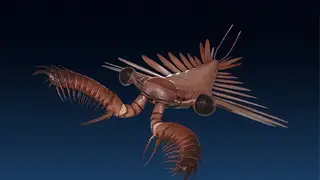
A fossilized swimming flap from a Cambrian radiodont shows a healed W-shaped wound, likely from a bite by another predator. The creature, Amplectobelua symbrachiata, was one of the largest predators of its time, reaching nearly a meter long. The healed injury suggests it survived an attack, possibly from a member of its own species.
The fossilized flap was recovered from China's Yu'anshan Formation, a site renowned for exceptional soft-tissue preservation. Researchers used X-ray fluorescence mapping to confirm the W-shaped notch matched the surrounding fossil's chemical composition, ruling out damage from the fossilization process itself. A darkened band along the wound's edge indicates melanisation, a healing response observed in modern arthropods during tissue regrowth.
Radiodont fossils are exceedingly rare—only about ten isolated swimming flaps have ever been documented. Because these flaps were softer than the creatures' grasping appendages, they rarely survived burial. The specimen's size suggests the animal measured at least 23 centimeters, though it could have been considerably larger if the flap came from a smaller position along the body.
This discovery could reshape public understanding of ancient ecosystems, showing that even apex predators faced constant threats. The evidence of cannibalism may influence how paleontologists interpret other Cambrian fossils, potentially revealing more about predator-prey dynamics in early animal life. For science educators and museums, such vivid injury evidence offers a compelling narrative that could spark broader interest in deep-time biology and evolutionary history among general audiences.