Hobbit hominin pelvis suggests upright gait closer to modern humans than to early ancestors
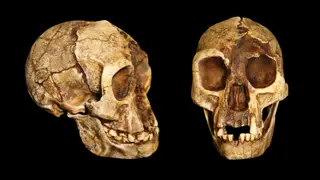
A fresh examination of Homo floresiensis hip bones reveals a pelvic shape more akin to that of modern humans than to earlier hominins such as Australopithecus. This finding challenges previous assumptions about the small-bodied species' locomotion and raises new questions about its evolutionary origins. The study adds to ongoing debates about how these enigmatic island dwellers moved and where they fit in the human family tree.
EXPANDED:
The reanalysis of Homo floresiensis pelvic remains indicates a hip structure that aligns more closely with Homo sapiens than with Australopithecus, the genus that includes the famous "Lucy" fossil. This suggests the small-bodied hominin, discovered on the Indonesian island of Flores, may have employed a bipedal gait more similar to modern humans than previously believed.
The finding complicates existing theories about H. floresiensis' evolutionary lineage. Researchers have long debated whether the species descended from early hominins or from a more derived Homo ancestor, with its small stature and brain size fueling speculation about