Solid Carbon Byproduct Poses Market Challenge for Methane Thermolysis
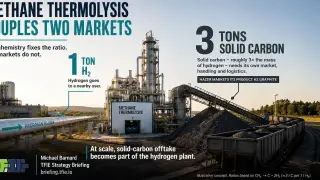
Methane thermolysis, which splits methane into hydrogen and solid carbon, produces roughly three tonnes of carbon per tonne of hydrogen. Even a large hydrogen-based steelworks would leave 80–90% of the graphite byproduct without a buyer. The difficulty lies in aligning the rate of carbon output with demand from industries such as steel, batteries, and concrete.
Methane thermolysis produces roughly three tonnes of solid carbon for every tonne of hydrogen, meaning a 300,000-tonne annual hydrogen plant would generate about 900,000 tonnes of graphite yearly. Hazer Group's catalytic process yields graphitic carbon rather than soot, and the company is actively pursuing applications in steel, batteries, asphalt, and concrete to find outlets for the material.
The mass-balance mismatch is stark even in the most favorable scenario. A Stegra-scale hydrogen-DRI steelworks could absorb only 45,000–63,000 tonnes of carbon annually while generating 340,000–365,000 tonnes from thermolysis. Steelmakers already have established suppliers like petroleum coke, anthracite, and biochar, while battery producers demand highly engineered graphite with strict specifications, leaving most thermolysis carbon without a natural buyer.
This structural mismatch could significantly affect the commercial viability of methane thermolysis as a clean hydrogen pathway. If carbon byproducts cannot find reliable markets, project economics may suffer, potentially slowing adoption of this technology despite its avoidance of CO₂ capture infrastructure. Industries like steel and batteries could benefit from new carbon supply sources, but only if quality and pricing align with their needs. The outcome may influence which hydrogen production methods gain traction in the transition to low-carbon industrial processes.