Autonomous sailboat fires missiles in Navy exercise
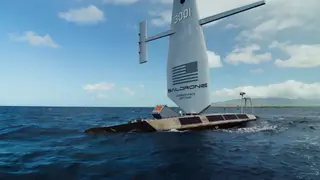
During the RIMPAC 2026 exercises near Hawaii, the U.S. Navy tested an unmanned sailboat that launched two JAGM missiles. The vessel, developed with Lockheed Martin, operated under the Navy's ARES system and also performed electronic warfare duties. The successful test marks a rapid integration of lethal capabilities onto autonomous surface craft.
The Saildrone Surveyor SD-3001 project began in October 2025 as a joint effort between Saildrone and Lockheed Martin, with the goal of pairing proven unmanned surface vehicle technology with existing missile systems. The RIMPAC demonstration required integrating the vessel into the Navy's ARES command framework, allowing carrier strike group operators to direct the drone's lethal payloads. The JAGM missiles used feature dual guidance—semi-active laser and millimeter-wave radar—enabling target engagement in poor visibility conditions.
Beyond its offensive role, the vessel demonstrated passive electronic warfare capabilities during the exercise, coordinating sensor data with an MH-60S helicopter to detect and classify a simulated threat. The success has paved the way for larger payload integrations, with the upcoming Saildrone Spectre expected to carry heavier containerized systems, including the Lockheed Martin Mk 70 launcher and a SURTASS towed array for submarine detection.
This milestone could reshape naval force composition, potentially reducing risk to human sailors while expanding persistent maritime surveillance and strike options. Autonomous armed vessels may lower operational costs and enable distributed lethality across vast ocean areas. However, they also raise questions about rules of engagement, escalation control, and accountability in combat scenarios. Defense contractors and naval planners could see accelerated demand for unmanned systems, while international maritime law may need adaptation to address fully autonomous weapons platforms operating alongside traditional carrier groups.