Roman Telescope's Experimental Coronagraph Could Unlock Exoplanet Imaging
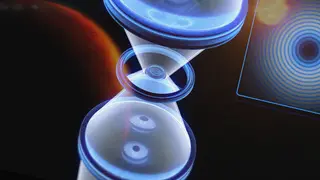
NASA's upcoming Nancy Grace Roman Space Telescope includes a specialized coronagraph designed to directly capture starlight reflected off exoplanets, a first for space-based instruments. The technology uses adaptive optics to correct light distortions, aiming to demonstrate feasibility for future missions seeking Earthlike worlds. Success would mark a major step toward imaging planets around sunlike stars.
The coronagraph's deformable mirrors represent a critical engineering first: each palm-sized mirror carries roughly 2,300 actuators that flex the surface in microscopic increments to counteract light distortion. This active correction capability, paired with photon-amplifying detectors, allows the instrument to suppress a host star's glare enough to reveal orbiting planets. Previous space coronagraphs on Hubble and Webb relied on simpler fixed masks, which the article describes as comparatively crude blocking devices. Roman's masks, by contrast, feature intricate custom shapes designed to redirect starlight with far greater precision. The mission's engineers will collect extensive performance data during operations, using the results to refine designs for future observatories targeting Earthlike worlds around sunlike stars.
If the coronagraph succeeds, it could reshape how astronomers search for habitable planets, potentially accelerating the timeline for a dedicated exoplanet-imaging mission. Society may benefit from expanded knowledge of whether Earthlike conditions exist elsewhere, influencing both scientific priorities and public interest in space exploration. However, the technology remains experimental, and its demonstration aboard Roman carries no guarantee of immediate breakthroughs. The outcome could also affect NASA's long-term budget planning, as proven techniques would justify investment in more ambitious follow-up observatories.