Ocean Chemistry Startup Turns Impure CO2 into Stable Bicarbonate
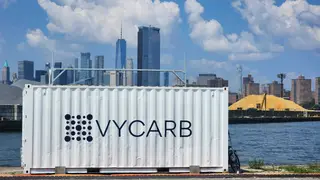
Brooklyn-based Vycarb has demonstrated that low-purity CO2, at concentrations as low as 50%, can be incorporated into seawater with 99% efficiency, converting 85% into stable dissolved bicarbonate. The process uses abundant alkaline minerals and minimal power, potentially lowering the cost and accessibility of carbon capture and storage. The company plans field trials to validate the method at 10% CO2 purity, which would allow direct use of exhaust gas without purification.
Vycarb’s pilot on the East River uses alkaline minerals and minimal electricity to bind CO2 into seawater as dissolved bicarbonate, avoiding the energy-intensive compression and geological storage typical of conventional carbon capture. The company’s tests show that even at 50% CO2 purity, 99% of the gas is absorbed, with 85% converted to stable bicarbonate—results that exceed initial targets. Field trials will now test 10% purity, matching raw exhaust gas, while lab work has already reached 1.5%. Independent verification is underway, and the team is also studying how other flue-gas components, like nitrogen oxides, might interact with the alkalizing chemistry.
If validated at low purities, this approach could make carbon removal far cheaper and more accessible for coastal industries, potentially accelerating adoption without requiring expensive purification infrastructure. The slight alkalinity of discharged water may benefit acidified coastal zones, though effects on local ecosystems remain unproven. Broader impact hinges on scalability and independent confirmation; if successful, it could shift CCS from a niche, high-cost practice to a routine industrial option, affecting emitters, regulators, and communities near ports and factories.