Hobbyist's 128-byte magnetic-core USB stick moves files between PCs in retro tech milestone
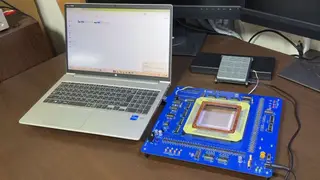
A Japanese researcher has successfully used a homemade USB drive built from magnetic core memory to transfer a text file between two computers, calling it a possible world first. The device, roughly the size of a dinner plate, holds only 128 bytes and erases data during reading, but also demonstrated a monochrome BMP image transfer. The project, showcased on Twitter, will be exhibited at Maker Faire Tokyo 2026.
The device pairs a 32×32 grid of magnetic cores with a Raspberry Pi Pico as its controller, which explains why Windows reports a 6.5KB capacity despite the 128-byte storage limit. Each core corresponds to an LED in the attached array, giving a live visual readout during transfers. The researcher, a space science professional by trade, previously showcased this project in February 2026 before completing the file-transfer milestone.
Magnetic core memory, patented by MIT's Jay Forrester, served as the dominant random-access storage technology for roughly two decades before being supplanted by semiconductor memory. The creator's follow-up demonstration successfully moved a monochrome BMP image up to 32×28 pixels, with part of the limited space consumed by the image header. The project is scheduled for public exhibition at Maker Faire Tokyo 2026.
This project is unlikely to alter consumer storage practices, but it may serve as a compelling educational artifact that makes computing history tangible. By demonstrating the physical constraints of early memory systems, it could deepen public appreciation for modern storage density and speed. Hobbyist communities and educators may find value in such retro-tech demonstrations, potentially inspiring renewed interest in foundational computing concepts. However, its practical impact remains confined to niche enthusiast circles, with no foreseeable effect on mainstream gadget development or consumer behavior.