Wireless CarPlay splits duties: Bluetooth for pairing, Wi-Fi for streaming
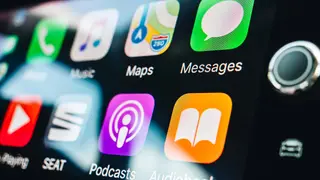
Wireless Apple CarPlay uses Bluetooth to establish and re-establish connections between an iPhone and a car, while Wi-Fi handles the active session's audio, video, and control data. During calls, audio also travels over Wi-Fi rather than Bluetooth. Apple recommends 5GHz Wi-Fi for better performance, though 2.4GHz can work.
The division of labor between Bluetooth and Wi-Fi in wireless CarPlay is deliberate. Bluetooth's low-power, short-range profile is ideal for detecting the iPhone and exchanging pairing credentials, but it lacks the bandwidth needed for continuous video and audio streaming. Wi-Fi, by contrast, offers far greater throughput, which is why the car generates its own local network for the session rather than relying on any external internet connection.
This architecture also explains why users must keep Wi-Fi enabled and Auto-Join active on their phones. A wired-to-wireless adapter does not grant CarPlay to vehicles that never had it; it merely replaces the USB link with a wireless one, preserving the original wired system's compatibility requirements.
This technical clarification could reduce consumer confusion about why wireless CarPlay sometimes fails to connect — users may mistakenly disable Wi-Fi or assume the car needs internet access. It may also influence purchasing decisions, as buyers weighing wireless versus wired setups can better understand the underlying requirements. The distinction between Bluetooth's pairing role and Wi-Fi's streaming role could help aftermarket adapter manufacturers set clearer expectations, potentially improving user satisfaction and reducing support complaints across the broader CarPlay ecosystem.