Rescuers race to find thousands missing after Himalayan flash flood
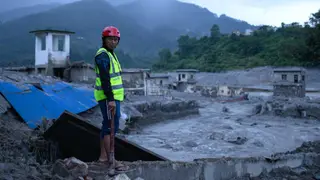
Rescuers in Nepal and China are searching for nearly 3,000 people missing after a glacial collapse triggered flash floods along the border. At least 682 bodies have been recovered, with efforts focused on tunnels at hydroelectric sites where over 100 workers may be trapped. The disaster underscores the growing threat of climate change to fragile mountain environments.
Rescue teams at the Trishuli 3A hydroelectric site successfully inserted a pipe into a tunnel late Saturday, allowing air to reach workers believed trapped inside, with excavation now underway to send in a rescue team. The disaster, triggered by a glacial collapse at the Nepal-Tibet border on Wednesday, has left 933 hydropower workers and 517 foreigners—including trekkers and Hindu pilgrims bound for Mount Kailash—among the missing.
The Isha Foundation, an Indian spiritual group, reported that 80 of its members were in the border port of Gyirong when it was "completely washed away," with no encouraging signs of survivors at the immigration office. The US Geological Survey confirmed the glacial collapse as the cause, while UN climate chief Simon Steill warned that warming temperatures are making such mountain disasters more frequent and severe.
This disaster could reshape how Himalayan nations approach infrastructure development, particularly hydropower projects built in fragile glacial zones. Families of the missing face prolonged uncertainty, while local communities may struggle to rebuild after losing entire riverside settlements. The event may also intensify international pressure on climate adaptation funding for mountain regions, as vulnerable populations bear the heaviest burden from warming-driven catastrophes. Tourism and pilgrimage routes could see reduced activity, affecting regional economies dependent on these industries.