Next lunar eclipse will be a subtle penumbral event in February 2027
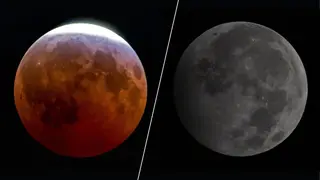
Following August's partial lunar eclipse, the next one occurs on Feb. 20, 2027, when a penumbral eclipse will dim the full Snow Moon. The darkening will be far more subtle than a partial eclipse, with the deepest shadow around the moon's north polar region at 6:12 p.m. EST. Earth's inner umbral shadow will miss the moon entirely.
The February 2027 event marks the second lunar eclipse in a six-month span, following August's dramatic 97% partial eclipse. During a penumbral eclipse, the moon travels only through Earth's faint outer shadow rather than the dark central umbra, producing a gentle shading that many observers may not notice without careful attention. The deepest dimming occurs at 6:12 p.m. EST, concentrated near the moon's north polar region.
For skywatchers seeking a more dramatic show, the article notes that a total lunar eclipse—transforming the moon into a deep red "Blood Moon"—will arrive on New Year's Eve in December 2028, visible across Asia, Australia, and the Pacific. Until then, the February event offers a subtle demonstration of orbital mechanics and a worthwhile photography challenge for those wanting to compare the dimmed Snow Moon against a regular full moon.
This subtle eclipse may primarily affect dedicated astronomy enthusiasts and astrophotographers, who could use the event as a technical exercise in capturing fine tonal differences. Casual stargazers may find the dimming underwhelming after August's vivid display, potentially dampening public engagement with lunar events. However, the contrast between eclipse types could serve an educational purpose, helping the public understand the geometry of Earth's shadows and the varying degrees of celestial alignment. The event may also generate modest media coverage, reinforcing the rhythm of predictable astronomical phenomena in an era of increasing space interest.