Roman Space Telescope Set for Liftoff to Chart the Cosmos
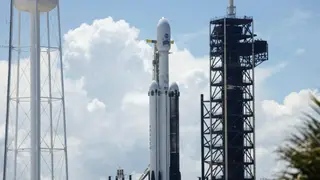
NASA's Nancy Grace Roman Space Telescope is scheduled to launch from Florida on Sunday aboard a SpaceX Falcon Heavy rocket. The observatory, which cost over $4 billion, will survey the sky with a field of view more than 100 times wider than Hubble's. Its mission includes searching for exoplanets and supernovae while investigating dark matter and dark energy.
The observatory honors Nancy Grace Roman, the pioneering astronomer known as the "Mother of Hubble" for her early work championing space-based telescopes. Standing over 12 meters tall, the telescope will take roughly 100 days to reach its operating position 1.5 million kilometers from Earth, where it will work alongside the James Webb Space Telescope.
Roman's infrared capabilities will detect light from objects billions of years old, effectively peering back in time. Its observations will complement data from the Rubin Observatory in Chile and ESA's Euclid probe, with scientists noting recent hints that the standard model of the universe's expansion may be incorrect.
This mission could reshape fundamental physics by testing whether current models of dark matter and dark energy hold up under unprecedented observational data. If Roman's findings challenge existing theories, it may alter how scientists understand cosmic expansion and structure. The project's scale could also inspire public interest in space exploration and STEM careers, while its exoplanet discoveries may influence future searches for habitable worlds beyond our solar system.